Rohit Sharma biography 2026: born 30 April 1987, the Hitman rose from a Borivali kid to ODI great with 12,000+ runs, five IPL titles and two ICC trophies.
Last updated: October 30, 2026 · By Nathan Cole
Rohit Sharma was born on 30 April 1987 in Nagpur, India, and at 39 he is still opening the batting for India in one-day cricket. That sentence alone would have sounded unlikely in 2011, when he was dropped from India’s World Cup squad, and impossible in 2007, when he arrived as a middle-order player who bowled off-spin at school. The career between those points is the fullest arc in modern Indian cricket: a scholarship kid from Borivali who became the only man with three double centuries in one-day internationals, captained Mumbai Indians to five IPL titles, and lifted two ICC trophies as India captain.
The 2026 version of Rohit is a narrower, sharper figure than the all-format captain of 2023. He retired from T20 internationals the night India won the 2024 T20 World Cup, retired from Tests in May 2025, and lost the ODI captaincy to Shubman Gill in October 2025 despite winning the Champions Trophy earlier that year. What remains is the format that made him: ODIs, where he passed 12,000 runs on 30 September 2026, becoming only the third Indian to do it. He has told interviewers he wants the 2027 World Cup. This biography covers the whole story — the one-room childhood, the records, the captaincy, the family, and the money — with every major figure dated and sourced.
Quick Facts
| Full Name | Rohit Gurunath Sharma |
| Born | 30 April 1987, Bansod, Nagpur, Maharashtra, India (age 39) |
| Nickname | Hitman |
| Role | Right-handed opening batter, India (ODI only since 2025) |
| Height | 5 ft 8 in (173 cm, as commonly listed) |
| Wife | Ritika Sajdeh (married 13 December 2015) |
| Children | Samaira (born 2018), Ahaan (born 2024) |
| ODI Runs | 12,000+ (passed 30 September 2026, 35 centuries) |
| Estimated Net Worth (2026) | ₹214–230 crore, roughly $26–28 million (reported estimates) |
| Last Updated | October 30, 2026 |
How This Biography Was Put Together
Dates, debuts, and career numbers here come from standard cricket references (Wikipedia and Cricinfo data, Britannica) cross-checked against 2026 reporting from CricToday, Latestly, and the IPL’s own site. Where outlets disagree — most visibly on net worth, where published figures run from ₹214 crore to ₹350 crore — the article publishes the range, names the outlets, and says which figure it trusts and why. Nothing in this profile is based on a private source or an unnamed claim.
+
Who Is Rohit Sharma?
Rohit Gurunath Sharma is an Indian international cricketer and the former captain of the India national team in all three formats. He plays for Mumbai in domestic cricket and for Mumbai Indians in the Indian Premier League, the franchise he joined in 2011 after three seasons with Deccan Chargers. Britannica calls him one of the greatest opening batters India has produced in ODI cricket, and the numbers back the description: the highest individual ODI score ever made, three ODI double centuries when no other player has two, and five centuries at a single World Cup.
His public image is built on two things that rarely travel together: languid timing and hard results. Bowlers talk about how little effort his big shots seem to take; scorebooks record what those shots added up to. Fans call him the Hitman, a nickname that stuck because of the six-hitting — he holds the records for the most sixes in ODIs, in World Cups, and across all international formats. Coaches who worked with him as a boy remember something quieter: a kid who was first picked for his off-spin and had to be talked into opening the batting.
As of October 2026, Rohit is 39, married, a father of two, and playing only ODIs. He is no longer captain of anything — Gill leads India in Tests and ODIs, and Hardik Pandya leads Mumbai Indians — yet he remains a first-choice opener for the format India will contest at the 2027 World Cup in South Africa, Zimbabwe, and Namibia. That last fact, more than any record, explains why his biography is still being updated.
Early Life: Borivali, One Room, and a Scholarship
Rohit was born in Bansod, a town in the Nagpur district of Maharashtra, to Gurunath Sharma, who worked as a caretaker of a transport firm’s storehouse, and Purnima Sharma, who came from Visakhapatnam in Andhra Pradesh. Money was tight enough that the family could not keep both children with them in one place. Rohit, the elder of two sons — his younger brother is Vishal — was raised largely by his grandparents and uncles in Borivali, a suburb in north-west Mumbai, and spent weekends at his parents’ one-room home in Dombivli.
That arrangement shaped his cricket. In 1999, when Rohit was 12, his uncle paid for him to attend a cricket camp in Borivali. The coach there, Dinesh Lad, first noticed him as an off-spinner. Lad, a former Western Railway player, arranged a scholarship for Rohit at Swami Vivekanand International School in Borivali, which had the better cricket facilities, after Rohit had started at Our Lady of Vailankanni High School. The school move is the hinge of the whole biography: without it, the transport-firm caretaker’s son does not get the coaching, the matches, or the visibility that followed.
The second hinge came in the nets. Lad watched Rohit shadow-practising his batting and decided the boy picked for his bowling was actually a batter. He moved him from No. 8 to opener. It is a small coaching decision that reads, in hindsight, like the most valuable selection call in Indian cricket history: the opener Rohit became would go on to score more ODI runs than almost anyone alive.
The Long Apprenticeship: Domestic Cricket and the 2007 Breakthrough
Rohit’s domestic breakthrough arrived fast once the school move was made. He made his List A debut in the Deodhar Trophy in 2005, playing for West Zone against Central Zone in Gwalior, and in the same tournament scored 142 off 123 balls against North Zone — an innings that put his name in front of selectors. He played for India A against New Zealand A in July 2006, made his Ranji Trophy debut for Mumbai in 2006–07, and won the competition in his maiden season. He had already toured the West Indies with India Under-19s in 2005 and played the Under-19 World Cup in Sri Lanka in 2006.
The international call came in June 2007: an ODI debut against Ireland in Belfast on 23 June. Three months later, at the inaugural T20 World Cup in South Africa, he announced himself to a wider audience with an unbeaten 50 off 40 balls against the hosts in a must-win Super Eight match in Durban. India won that tournament, and Rohit, aged 20, owned a world title before he owned a regular place in the side.
The years that followed were slower than the start suggested. He drifted in and out of the ODI middle order, and the lowest point came in 2011, when he was left out of India’s home World Cup squad — the tournament India went on to win. Players rarely recover publicly from that kind of omission at 23. Rohit’s recovery took the form of a positional change, and it took two more years.
The Opening Gamble That Changed Everything
In 2013, India moved Rohit to the top of the order in limited-overs cricket, and Mumbai Indians made him captain mid-season. Both gambles paid off in the same year: India won the ICC Champions Trophy in England with Rohit opening, and Mumbai Indians won their first IPL title under his captaincy. His Test debut followed that November, against West Indies at Eden Gardens, where he scored 177 — the second-highest score on Test debut by an Indian.
Opening suited his game in a specific way. As a middle-order player he had to manufacture pace; as an opener he could take the first ten overs to settle, then expand. The signature Rohit innings — slow start, long middle, brutal finish — became a pattern rather than an accident. It also suited his temperament. Teammates describe a dressing room presence built on calm rather than noise, and the captaincy record that followed suggests the calm was real: players kept performing for him across two very different teams.
The opening move also explains the records section that follows. Double centuries in ODIs are not hit by players batting at No. 5. They are hit by openers who face the most balls, survive the new ball, and are still standing when the field spreads. Rohit has done it three times. Nobody else has done it twice.
264 and the Records Nobody Else Owns
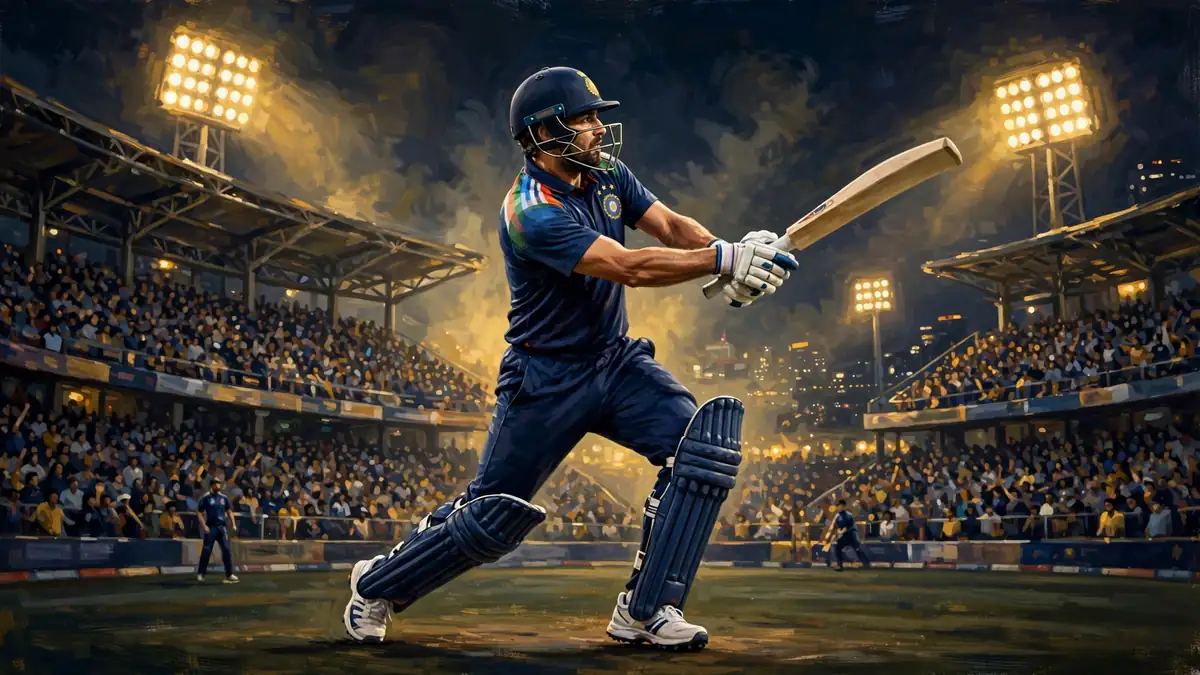
Three innings define Rohit’s batting legacy, and all three are double centuries in ODIs. The first came against Australia in Bangalore in 2013: 209 off 158 balls, his first double hundred, made after he had been dropped early and punished the reprieve for the rest of the afternoon. The second, a year later, is the one every biography leads with: 264 off 173 balls against Sri Lanka at Eden Gardens, Kolkata, on 13 November 2014, the highest individual score in ODI history, with 33 fours and 9 sixes. The third came against the same opponents in Mohali in 2017: 208 not out, made while captaining the side in Virat Kohli’s absence.
The World Cup record sits beside them. At the 2019 World Cup in England, Rohit scored five centuries in a single tournament — against South Africa, Pakistan, England, Bangladesh, and Sri Lanka — a record no player had set before. India lost the semi-final to New Zealand, so the record carries a sting, but as a pure batting achievement it has not been matched since. Add the six-hitting records — most sixes in ODIs, most in World Cups, most across all international formats — and the shape of the career is clear: when Rohit bats long in white-ball cricket, the scoreboard moves faster than the fielding side can plan for.
Captaincy: Five IPL Titles and Two ICC Trophies
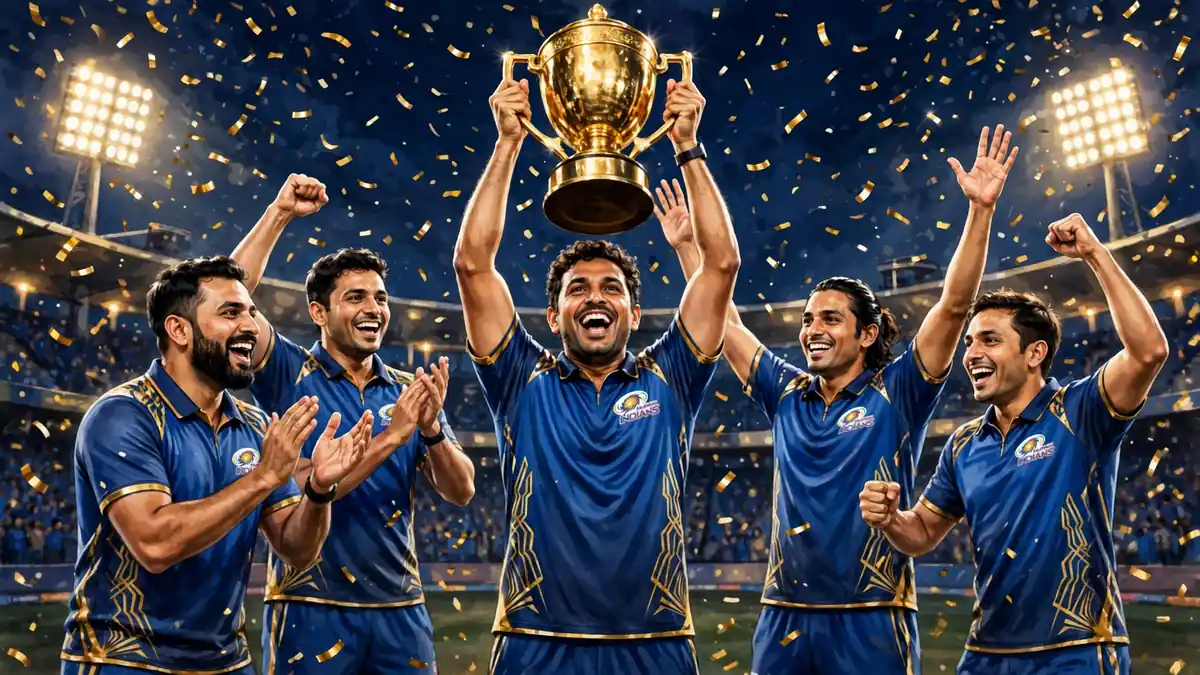
Rohit’s captaincy story divides into two halves: the franchise half, which is unmatched, and the India half, which took a decade to deliver a trophy and then delivered two in thirteen months. At Mumbai Indians, he took over mid-season in 2013 and won the title that year, then again in 2015, 2017, 2019, and 2020 — five IPL titles as captain, a record he held outright until the franchise’s later seasons. He led the side for a decade, through the 2023 season, before the captaincy passed to Hardik Pandya ahead of 2024. He stayed with the franchise as a player, retained at ₹16.30 crore per season for 2025 and 2026.
For India, he became full-time captain across formats in 2022, after Kohli’s tenure ended. The first major final under him ended in disappointment: the 2023 ODI World Cup final at home, where Australia beat India in Ahmedabad after India had won ten straight matches. The response was emphatic. India won the 2024 T20 World Cup in the West Indies and the USA, beating South Africa in the final in Barbados — Rohit’s first ICC trophy as captain, and the night he retired from T20 internationals. Eight months later, in Dubai, he captained India to the 2025 Champions Trophy title, scoring 76 in the final against New Zealand and becoming the first captain ever to be named Player of the Match in a Champions Trophy final.
That sequence — a home final lost, then back-to-back ICC trophies — is why the October 2025 decision to remove him as ODI captain surprised even former players. Harbhajan Singh said on Star Sports that he was shocked to see Rohit axed despite having just won the Champions Trophy. The selectors’ logic, as reported at the time, was succession planning for the 2027 World Cup: Gill, already Test captain after Rohit’s retirement, would build the ODI side. Rohit, to his credit, did not walk away. He kept himself available, and the selectors kept picking him.
Test Cricket: A Late Bloom and a May 2025 Farewell
Test cricket was the format that took longest to accept Rohit, and the one he left first. After the 177 on debut in 2013, he spent years as a stop-start Test player, dropped and recalled, before his second act as an opener from 2019 gave him a real run. In that second act he scored some of his finest innings, including 212 against South Africa at Ranchi in 2019 and a century in difficult conditions at The Oval in 2021.
The final numbers are respectable rather than record-breaking: 67 Tests, 4,301 runs at 40.57, with 12 centuries and 18 half-centuries, and a highest score of 212. As Test captain he led India in 24 matches, winning 12, losing 9, and drawing 3, and took the side to two World Test Championship finals. On 7 May 2025, days before India’s tour of England, he announced his retirement from Tests with immediate effect, while confirming he would continue in ODIs. Kohli announced his own Test retirement a week later. The pair’s departures closed the longest-running batting partnership of India’s modern era in the space of seven days.
It is worth stating plainly what the retirement was not: it was not a sacking, and it was not a form collapse announced as a choice. Rohit’s last Test was the Boxing Day Test against Australia in December 2024. He chose the timing, and he chose to keep the format where his record is strongest.
The 2026 Chapter: ODI-Only, 12,000 Runs, and the 2027 Target
The 2026 chapter of this biography is short, and that is the point. Rohit now plays one format, for one reason: the 2027 ODI World Cup. The milestones of the year tell the story. On 30 September 2026, in the second ODI against West Indies in Guwahati, he passed 12,000 ODI runs in his 282nd innings — the third Indian after Sachin Tendulkar and Virat Kohli, and only the seventh batter in history, to reach the mark. His ODI century count stood at 35 by then, in around 290 matches.
Off the field, the 2026 news is a television show and a selection subplot. CricToday reported on 27 October 2026 that Rohit is involved in a show called ‘Family Full House with Rohit Sharma’, on which he joked that he has to keep both Gill and Shreyas Iyer happy — Gill because he is his ODI captain and the 2027 World Cup matters, Iyer because Iyer now captains the T20I side and a comeback there after 2027 would run through him. The joke landed because it was honest about the new hierarchy: the former captain of everything is now a senior player under two younger captains.
The immediate calendar, as reported in late October 2026, is a five-match ODI series against New Zealand starting 4 November 2026, with Gill leading the first three matches before stepping aside to prepare for the Test series and Iyer taking charge for the rest. If Rohit plays that series and the 2027 World Cup, he will close his career where it started to matter: as an opener, in the format he remade, chasing one trophy he has never won as a player — an ODI World Cup winners’ medal.
Honours: Arjuna, Khel Ratna, and Padma Shri
India’s civilian and sporting honours system tracked Rohit’s rise in order. He received the Arjuna Award in 2015, the year after the 264, recognising sustained excellence at international level. In 2020 he received both the Rajiv Gandhi Khel Ratna — then India’s highest sporting honour — and the Padma Shri, the country’s fourth-highest civilian award. The pair, awarded in the same year, marked the point at which his status shifted from star batter to national institution: the Khel Ratna for the runs, the Padma Shri for what the runs had come to mean.
Those honours sit alongside his ICC recognition. He was named in ICC teams and won ICC awards across formats during the 2010s and 2020s, but the domestic honours matter more for a biography because they are decided by committees, not algorithms: they record how the country, not just the sport, rated the career at the time. By 2020, with five IPL titles and the 2019 World Cup record behind him, the answer was unambiguous.
Family: Ritika, Samaira, and Ahaan
Rohit married Ritika Sajdeh on 13 December 2015 in Mumbai, after six years of dating. Ritika worked as a sports manager — she had managed cricketers including Yuvraj Singh — before the wedding, and the couple had announced their engagement in June 2015, with Rohit proposing at the Borivali Sports Club, the ground where his own story had started. Their daughter, Samaira, was born on 30 December 2018. Their son, Ahaan, was born on 15 November 2024, during a period when Rohit was captaining India across formats and, by several reports, travelling constantly; the birth was announced quietly, in keeping with how the couple handle family news.
Samaira has become a familiar sight at grounds and in team celebrations — she was on the field during India’s trophy lifts — but the family keeps a lower profile than most celebrity households of this size. Rohit’s parents, Gurunath and Purnima, and his brother Vishal, stay out of the public side of the career. Off the field, Rohit is reported to support animal-rights causes and to serve as a WWF-India Rhino Ambassador, and a charitable trust in his name was reported to have been set up in 2023, focused on marginalised communities, healthcare, education, and environmental conservation. Those off-field lines are reported, not verified to the standard of the cricket numbers, and are included on that basis.
Money: The ₹214 Crore Fortune Behind the Biography
A biography of a modern cricketer is incomplete without the money, and Rohit’s is unusually well documented in its parts, even if the total is disputed. The most credible 2026 reporting — the IPL’s own site in July 2026 and a CricHeroes breakdown citing ET Now and Celebrity Net Worth — puts his net worth at ₹214 crore, roughly $25.6 million. Jagran Josh’s March 2026 range runs slightly higher, at ₹214–230 crore (about $25.7–28 million). This page uses ₹214–230 crore, roughly $26–28 million, as its range. Higher figures exist — ₹250 crore in one May 2026 roundup, more than ₹350 crore in a birthday piece — but they mix gross asset values with stale contract figures and do not deduct liabilities, so they are treated here as outliers, not rivals.
The income pillars are not in dispute. Mumbai Indians pay him ₹16.30 crore per IPL season, and his career IPL earnings are reported at roughly ₹185–195 crore, among the highest totals in league history. His BCCI central contract fell from Grade A+ (₹7 crore a year) to Grade B (₹3 crore a year) in February 2026, after his Test and T20I retirements reduced his format load; he also earns ₹6 lakh per ODI appearance. Endorsements are the largest and least precise pillar: he is linked to more than 25 brands — Adidas, CEAT, Hublot, Oakley, Dream11, Noise, Swiggy, Max Life Insurance, Ixigo, Goibibo, and Oral-B among them — with annual endorsement income claimed anywhere from ₹50 crore to ₹65 crore a year. That spread is the honest answer: brand fees are rarely disclosed per deal, so any single figure is a guess built on a range. His reported Worli, Mumbai home, valued around ₹32 crore, is the best-known asset in a portfolio that also includes earlier property purchases.
| Income source | 2026 figure | Source / status |
|---|---|---|
| IPL salary (Mumbai Indians) | ₹16.30 crore per season | IPL.com, CricHeroes (2025–26) |
| Career IPL earnings | ~₹185–195 crore | CricHeroes, Jagran Josh |
| BCCI central contract | Grade B, ₹3 crore a year | IPL.com, CricHeroes (Feb 2026 downgrade) |
| ODI match fee | ₹6 lakh per match | IPL.com |
| Endorsements (25+ brands) | ₹50–65 crore a year (claimed) | IPL.com, CricHeroes — wide, flagged as claimed |
| Reported home (Worli, Mumbai) | ~₹32 crore | SportsMint Media (reported) |
Career Numbers in One Table
| Format | Matches | Runs | Highest | Notes |
|---|---|---|---|---|
| Test | 67 | 4,301 (avg 40.57) | 212 | 12 centuries; retired 7 May 2025 |
| ODI | ~290 | 12,000+ | 264 | 35 centuries; 3 double centuries |
| T20I | 159 | — | 118 | Retired 29 June 2024 after World Cup win |
| IPL (as captain) | — | — | — | 5 titles: 2013, 2015, 2017, 2019, 2020 |
One caution on the table: T20I and ODI match counts move with every series, and different references snapshot them on different dates. The Test figures are final, since he has retired from the format. The ODI figures are current to the 30 September 2026 milestone and the reporting around it.
The Pull Shot, the Calm, and the Criticism
Every long career collects a counter-argument, and Rohit’s has three. The first is the 2023 home World Cup final: ten wins, then a loss to Australia on the day that mattered, with Rohit’s own brisk 47 the only real resistance at the top. The second is the captaincy handover of 2025, which even sympathetic former players called harsh given the Champions Trophy win that preceded it. The third is the recurring question about fitness and form in his late thirties — a question that follows every ageing opener and that Rohit has answered, so far, with runs rather than statements.
What survives those arguments is the batting itself. Rohit’s best shots — the pull in front of square, the straight drive played late, the lofted drive over extra cover — share a quality coaches call “time”: he seems to have longer to play the ball than other batters facing the same delivery. That quality, plus a captaincy record of five IPL titles and two ICC trophies, is why a player dropped from a World Cup squad at 23 is, at 39, still being picked for the next one. The biography is not finished, and the final chapter depends on a tournament still a year away.
Sources & Reporting
Figures in this profile reflect reporting through October 2026. Key sources: Wikipedia / Cricinfo data (debuts, career statistics, 264 and double-century records); Britannica (biography, six-hitting records, captaincy summary, January 2026 edition); CricToday (27 October 2026, ODI-only status, Gill/Iyer captaincy remarks, New Zealand series from 4 November 2026, ‘Family Full House’ show); Latestly and Sports Digest (October 2026, captaincy handover details); Circle of Cricket and Global Cricinfo (October 2025, Gill’s appointment as ODI captain); RoyalStagFan (career records, 12,000-run milestone on 30 September 2026 in Guwahati, Test captaincy record); IPL.com (July 2026, ₹214 crore net worth, Grade B contract, ₹16.30 crore IPL salary); CricHeroes blog and Jagran Josh (2026 net-worth ranges and IPL career earnings); Wikibio, Knowlepedia, Naction, and Criczop (family, schooling, Dinesh Lad, marriage and children). Where outlets disagree, the article explains why and publishes a range rather than picking a side.
Frequently Asked Questions
When was Rohit Sharma born and how old is he in 2026?
Rohit Sharma was born on 30 April 1987 in Bansod, Nagpur, Maharashtra, India. He is 39 years old in 2026 and turns 40 on 30 April 2027.
Who is Rohit Sharma’s wife and how many children does he have?
Rohit Sharma is married to Ritika Sajdeh, a sports manager, since 13 December 2015. They have two children: daughter Samaira, born 30 December 2018, and son Ahaan, born 15 November 2024.
What is Rohit Sharma’s net worth in 2026?
Rohit Sharma’s net worth in 2026 is reported at ₹214–230 crore, roughly $26–28 million. The range reflects 2026 reporting from IPL.com (₹214 crore) and Jagran Josh (₹214–230 crore); higher figures up to ₹350 crore use gross asset values and are treated as outliers.
How many runs has Rohit Sharma scored in ODIs?
Rohit Sharma passed 12,000 ODI runs on 30 September 2026, in his 282nd ODI innings during the second ODI against West Indies in Guwahati. He is the third Indian, after Sachin Tendulkar and Virat Kohli, and the seventh batter overall to reach 12,000 ODI runs, with 35 ODI centuries.
What is Rohit Sharma’s highest ODI score?
Rohit Sharma’s highest ODI score is 264, made against Sri Lanka at Eden Gardens, Kolkata, on 13 November 2014. It remains the highest individual score in ODI history, and he is the only player with three ODI double centuries.
How many IPL titles has Rohit Sharma won as captain?
Rohit Sharma won five IPL titles as Mumbai Indians captain, in 2013, 2015, 2017, 2019, and 2020. He led the franchise for a decade before the captaincy passed to Hardik Pandya ahead of the 2024 season.
Why did Rohit Sharma retire from Tests and T20Is?
Rohit Sharma retired from T20 internationals on 29 June 2024, the night India won the T20 World Cup, and from Tests on 7 May 2025, days before India’s tour of England. In both cases he said he would continue in ODIs, narrowing his career to the format where his record is strongest and keeping himself available for the 2027 ODI World Cup.
Is Rohit Sharma still playing in 2026, and will he play the 2027 World Cup?
Yes. Rohit Sharma is still playing ODI cricket in 2026 under captain Shubman Gill, who replaced him as ODI captain in October 2025. He has confirmed his availability for the 2027 ODI World Cup and, per October 2026 reporting, returns in India’s five-match ODI series against New Zealand starting 4 November 2026.
WRITTEN BY
Nathan Cole
Nathan Cole is the editor of Guide Net Worth. He covers celebrity wealth the way a business desk covers earnings: reported figures first, estimates labeled as estimates, and no invented numbers. Every profile on this site passes through his desk before it publishes. About Guide Net Worth · Corrections: figures are updated when new reporting emerges — contact us via the About page if you spot an error.
References & Sources
This article has been fact-checked and verified against multiple public sources, financial disclosures, SEC filings, Forbes reports, Celebrity Net Worth databases, and official records. All net worth estimates are based on publicly available information and financial analysis.