Virat Kohli turned 38 on November 5, 2026 — and celebrated with a 74 off 51 balls in Auckland. His age, career timeline, family and 2026 form, in full.
Last updated: November 14, 2026 · By Nathan Cole
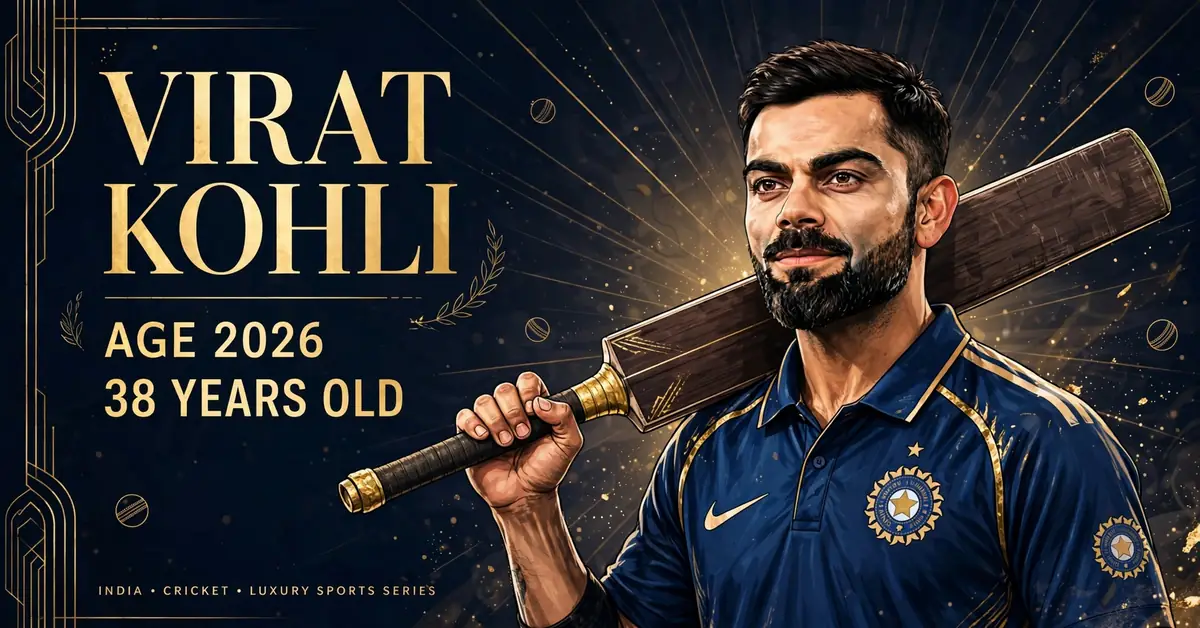
Virat Kohli is 38 years old. He was born on November 5, 1988, in Delhi, India, and turned 38 on November 5, 2026 — in the middle of a five-match ODI series in New Zealand, one day after scoring 74 off 51 balls in Auckland. He is 18 years into an international career that began when he was 19, and he is still, by the numbers, the best ODI batter on the planet: 15,183 ODI runs, 54 ODI centuries — the most in history — and 1,002 runs at an average of 77.07 in the 16 ODI innings since he retired from Test cricket.
This profile answers the age question properly and then tells the story the number belongs to: the Delhi schoolboy who batted the day after his father’s death, the 19-year-old who captained India to an Under-19 World Cup, the captain who rebuilt Indian Test cricket, the retirements that were supposed to be the end, and the 2026 renaissance that has made 38 look like a beginning. It also covers his family, his net worth — an estimated $120–135 million — and the one question that now hangs over everything: the 2027 World Cup.
A note on the number first. Some pages still list Kohli as 37. They are snapshots from before November 5, 2026, and they are wrong now. Every fact below is dated to November 2026 reporting, and where sources disagree, the disagreement is named.
Quick Facts: Virat Kohli
| Full name | Virat Kohli |
| Born | November 5, 1988, Delhi, India |
| Age in 2026 | 38 (turned 38 on November 5, 2026) |
| Height | 5 ft 9 in (175 cm) |
| Role | Right-handed top-order batter (No. 3 in ODIs) |
| International debut | ODI, August 2008 vs Sri Lanka, Dambulla (aged 19) |
| Test career | 123 matches, 9,230 runs @ 46.85, 30 centuries — retired May 12, 2025 |
| ODI career | 15,183 runs, 54 centuries, 80 fifties (as of November 2026) |
| International centuries | 85 (30 Test + 54 ODI + 1 T20I) |
| Captaincy | Test captain 2014–2022 (40 wins); ODI/T20I captain 2017–2021 |
| IPL team | Royal Challengers Bengaluru — champions 2025 |
| Wife | Anushka Sharma (married December 11, 2017) |
| Children | Vamika (b. 2021), Akaay (b. 2024) |
| Net worth (2026) | $120–135 million |
How This Age Was Verified
Kohli’s date of birth — November 5, 1988 — is one of the best-documented facts in cricket, confirmed by ESPNcricinfo, Wikipedia and every major outlet. The age question in November 2026 is simply arithmetic: he turned 38 on November 5, 2026, nine days before this profile was published. The reporting around that birthday is unusually fresh — SportsAdda, CricTracker, NewsXphere and SportsLine all published birthday pieces on November 5, 2026, and the match reports from the New Zealand series (November 4 and 7, 2026) confirm he was playing international cricket on the eve of his 38th birthday. Pages that still say 37 were last updated before November 5 and have not caught up.
+
How Old Is Virat Kohli in 2026?
Virat Kohli is 38 years old. He was born on November 5, 1988, in Delhi, and celebrated his 38th birthday on Wednesday, November 5, 2026 — on tour in New Zealand, in the middle of a five-match ODI series, with the next match already in view. Indian cricketers past and present lined up to wish him well; Yuvraj Singh, his teammate from the 2011 World Cup side, called him “four times more hardworking” than anyone else he had played with.
The birthday itself tells you most of what you need to know about Kohli at 38. He did not spend it at home, or at a public event, or on holiday. He spent it the way he has spent most of his adult life: in whites-turned-blues, preparing for the next match, with a century count that keeps climbing and a fitness regime that has younger players struggling to keep up. At an age when most batters are retired, commentating or coaching, Kohli is still the man India turns to when a chase gets difficult.
Early Life in Delhi
Kohli was born into a middle-class Punjabi family in Uttam Nagar, West Delhi. His father, Prem Kohli, was a criminal lawyer; his mother, Saroj, a homemaker. He was the youngest of three children, with an older brother, Vikas, and an older sister, Bhawna. Cricket arrived early: his father enrolled him at the West Delhi Cricket Academy when he was nine, and the coaches there remember a small boy with an unusually straight bat and an unusually stubborn streak.
The academy years were not easy. Delhi’s junior cricket is famously competitive, and Kohli was neither the biggest nor the strongest of his age group. What set him apart was temperament — a willingness to practise longer, to bat longer, and to treat every net session as if it mattered. By 2006, at 17, he had made his first-class debut for Delhi. The next chapter of his life would arrive sooner, and more cruelly, than anyone expected.
The 18-Year-Old Who Played Through Grief
In December 2006, Kohli was 18 and playing a Ranji Trophy match for Delhi against Karnataka when his father died. Prem Kohli had been ill, but the death was sudden. The team expected the teenager to go home. Instead, Kohli told his coach he wanted to bat the next day. He walked out, scored 90, and saved the match for Delhi before leaving for the funeral.
The innings has become the founding myth of Kohli’s career, and for good reason: it is the first time the qualities that would define him — the refusal to yield, the ability to bat through anything — were visible in public. He has spoken about it rarely and plainly since, saying only that his father would have wanted him to play. It is also the moment his career became a family mission as much as a personal one: the lawyer’s son from Uttam Nagar, playing for the father who never saw him play for India.
Under-19 World Cup and the ODI Debut
Eighteen months later, Kohli captained India to the Under-19 World Cup in Malaysia in 2008, leading a side that included future internationals and beating South Africa in the final. The tournament made him a name in Indian cricket, and the selectors moved fast: in August 2008, at 19, he made his ODI debut against Sri Lanka in Dambulla. He was not an instant success — his first few series were modest — but the selectors kept faith, and by 2009 he was scoring his first ODI century, against Sri Lanka in Kolkata.
The early years were a slow build rather than an explosion. Kohli learned his trade in the middle order, then at No. 3, and by the 2011 World Cup — won by India on home soil, with Kohli scoring a century in the opening match against Bangladesh — he was an established international. He was 22. The decade that followed would make him the defining batter of his generation.
The Rise: From Talent to Mainstay, 2008–2013
Between his debut and 2013, Kohli became the player India built its batting around. The numbers from those years are the foundation of everything since: a Test debut in 2011 in the West Indies, a first Test century in Adelaide in January 2012, and an ODI record that grew at a rate no Indian batter had managed since Tendulkar. His 2012 Asia Cup innings — 183 against Pakistan in Mirpur — remains one of the great ODI knocks ever played by an Indian, scored at 23.
What changed in this period was not just the runs but the role. When the greats of the previous generation retired — Dravid and Laxman in 2012, Tendulkar in 2013 — Kohli was the player the team turned to, not because he was the oldest but because he was the most certain. The 183 against Pakistan in the 2012 Asia Cup, scored at 23 in a chase of 330, was the innings that announced him as a chaser rather than just a run-maker: it was the highest ODI score by an Indian against Pakistan, and it came in a match India had to win. Two years later, in 2014, he scored 141 in Adelaide in his first Test as captain, chasing 364 on the final day — a declaration of intent that the new leader would not play for draws. Sachin Tendulkar’s biography is the story of the man Kohli grew up idolising; by 2013, the comparisons between them had stopped being flattering and started being serious.
Captain Kohli: The Test Years, 2014–2022
Kohli took over the Test captaincy in December 2014, at 26, after MS Dhoni’s sudden retirement mid-series in Australia. What followed was the most successful captaincy in Indian Test history: 40 wins in 68 Tests, a first-ever series win in Australia in 2018–19, and a team built in his image — fit, aggressive, and built around a pace attack that could win anywhere. He demanded fitness standards that transformed Indian cricket, introduced the yo-yo test as a selection gate, and turned a team that had been beaten abroad for years into one that expected to win there.
His own batting as captain was extraordinary: 20 of his 30 Test centuries came while leading the side. The peak was the 2018–19 tour of Australia, where India won a Test series on Australian soil for the first time in 71 years of trying — a 2–1 victory built on a pace attack of Bumrah, Shami and Ishant, and on Kohli’s own 123 in Perth, scored on the fastest pitch in the country against an attack that had dismissed India cheaply in the first innings. He was 30, at the height of his powers, and the series win is still the achievement he is most often asked about. The captaincy ended in January 2022, after the series defeat in South Africa, and he gave up the ODI and T20I leadership the same season. MS Dhoni’s biography covers the man Kohli succeeded — and the contrast is instructive: Dhoni was the calm finisher, Kohli the burning competitor, and Indian cricket was shaped by both.
The Chase Master: ODI Records at 38
If Tests were Kohli’s captaincy, ODIs are his kingdom. The numbers, as of November 2026, are without parallel in the format’s history: 15,183 ODI runs, 54 ODI centuries — more than any batter ever — and 80 ODI fifties. He is the only batter in history to average more than 50 in all four SENA countries (South Africa, England, New Zealand and Australia), averaging 76.38 in South Africa and 51.53 in New Zealand. At No. 3, where he has batted for most of his career, he has 13,062 runs — the first batter ever to pass 13,000 runs at that position.
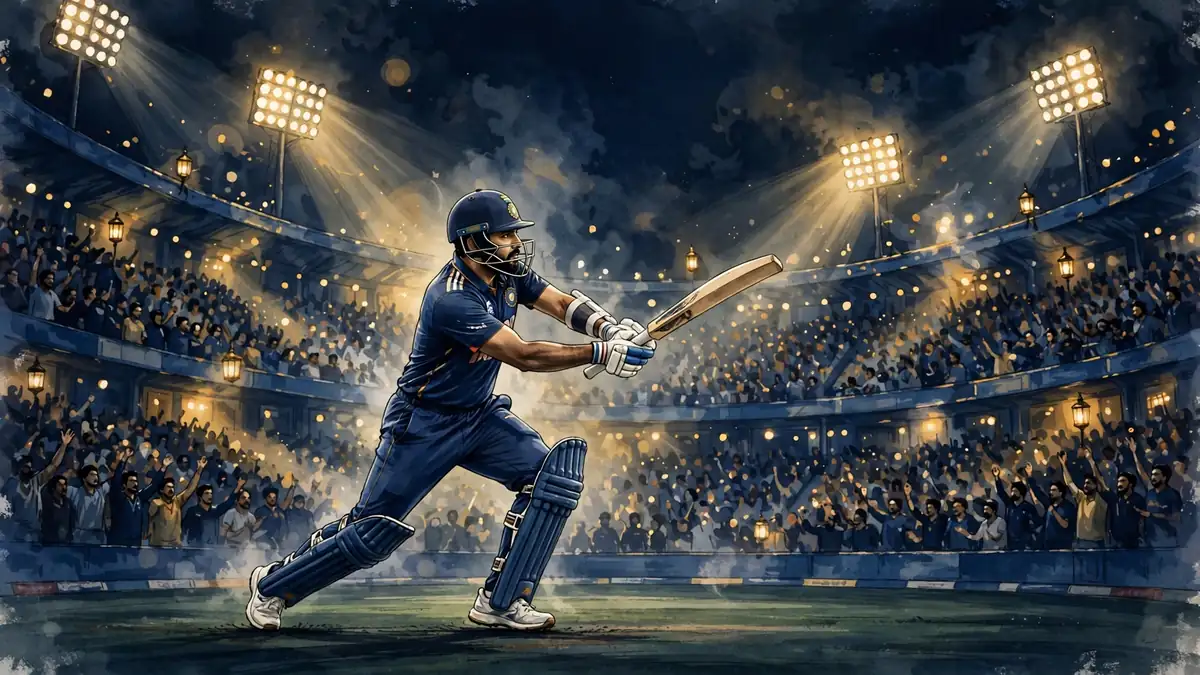
The chase is where the legend lives. Kohli has 25 centuries and 30 half-centuries in successful ODI chases alone — more than any batter in history — and his average in chases sits above 60. It is the record that earned him the nickname “Chase Master”, and it is the record that explains why, at 38, India still wants him at No. 3 when a target looks too big. Rohit Sharma’s fortune was built at the other end of the same innings — the two men have opened and built together for a decade and a half, and their partnership is the most productive in Indian ODI history.
Test Retirement: May 12, 2025
On May 12, 2025, at 36, Kohli announced his retirement from Test cricket. The decision, delivered in a short social-media post, ended a 14-year Test career: 123 matches, 9,230 runs at 46.85, 30 centuries and 31 fifties. The announcement surprised even those close to him — he had spoken, months earlier, about wanting to play the England series that summer — but the logic was clear. The body was asking for a shorter calendar, the ODI game still needed him, and the 2027 World Cup was 29 months away.
The reaction was the measure of the career. Tributes came from every corner of the game, and the numbers were laid out one last time: 40 wins as captain, the Australia series win, the 2018 hundred at Edgbaston, the 254 not out against South Africa. He left Tests as India’s fourth-highest run-scorer in the format, and as the man who had changed what Indian Test cricket believed it could do. He did not, however, leave cricket. That distinction matters, because the year that followed was one of the best of his life.
Life After Tests: The 2026 ODI Renaissance
Freed from the Test calendar, Kohli’s ODI numbers since his retirement are startling. Across 16 ODI innings since returning to international cricket in October 2025, he has scored 1,002 runs at an average of 77.07, with four centuries and six half-centuries, at a strike rate of 115.17. Ten of those 16 innings produced scores of 50 or more. In his last 14 ODI innings, he has ten fifty-plus scores, including four centuries. The pattern is not a farewell tour — it is a batter playing the best one-day cricket of his life at 37 and 38.
The context makes it more remarkable. Kohli is now a one-format international, playing only ODIs and the IPL, with months between assignments. The conventional wisdom says that rhythm dies without regular cricket. His numbers say the opposite: rest, fitness work and selective scheduling have made him fresher, not rustier. It is the same lesson Jasprit Bumrah’s rise taught from the bowling side — that workload management, done properly, extends careers rather than shortening them.
November 2026: A Birthday Week in New Zealand
The week of his 38th birthday was Kohli in miniature. On November 4, in the first ODI of a five-match series against New Zealand at Eden Park, Auckland, he walked in early after Rohit Sharma fell for a six-ball duck, and scored 74 off 51 balls — his 80th ODI fifty — carrying India to a five-wicket win by the Duckworth-Lewis-Stern method in a rain-hit match. The innings took him past 13,000 ODI runs at No. 3, a first in the game’s history, and it came the day before his birthday.
Three days later, in Wellington, he made just 7 in India’s chase of 135 — and still made history, passing Ricky Ponting to become the highest ODI run-scorer against New Zealand, with 1,978 runs in 38 innings at 56.51, including seven centuries and 11 fifties. The series continues, and the next milestone is already in view: he sits on 28,068 international runs, second all-time behind Tendulkar’s 34,357, and on 85 international centuries. The birthday cake, by all accounts, was cut at Eden Park. The next match was already in view.
T20I Farewell and the 2024 World Cup
Kohli’s T20I career ended the way careers are supposed to end. In the 2024 T20 World Cup final against South Africa in Barbados, he scored 76 and was named Player of the Match as India won the title — and announced his T20I retirement on the podium, minutes after the trophy was lifted. It was the perfect exit: a match-winning innings, a world title, and a decision made at the top rather than forced by form.
The T20I retirement, like the Test one a year later, was a narrowing of focus rather than a winding down. Each format he has left has made him better in the ones that remain. It is a pattern worth noting for anyone who assumes 38 means decline: Kohli has retired from two formats and gotten better in the third.
RCB and the IPL: The 2025 Title
For 17 seasons, the IPL title eluded Kohli and Royal Challengers Bengaluru — and the running joke in Indian cricket was that the greatest batter of his generation could not win the league he had played in since 2008. That ended on June 3, 2025, when RCB beat Punjab Kings in the final in Ahmedabad to win their first IPL title. Kohli, 36 at the time, scored 43 in the final and wept at the presentation. The title completed his trophy cabinet: a World Cup, a Champions Trophy, a T20 World Cup, and now the IPL.
He remains RCB’s only ever-present player, retained for ₹21 crore for the 2025–27 cycle, and the franchise’s identity is inseparable from his. Shubman Gill’s biography is the story of the next generation — India’s 27-year-old captain, learning the job Kohli held for eight years — and the IPL is where the two eras overlap every season.
Virat Kohli’s Net Worth at 38
At 38, Kohli is the richest cricketer of his generation. His net worth in 2026 is estimated at $120–135 million — roughly ₹1,050–1,150 crore — according to CelebAmerica’s November 12, 2026 profile, with Celebrity Net Worth putting the figure at $120 million (updated April 27, 2026). The fortune is built from a BCCI Grade A+ central contract worth ₹7 crore a year, the ₹21 crore RCB retention, and one of the largest endorsement portfolios in world sport — MRF, Puma, Audi and a dozen more — plus his own ventures, including the One8 brand and restaurant investments.
The full breakdown, with the dated per-source figures, is covered in Virat Kohli’s net worth profile on CelebAmerica, our sister site. What matters here is the shape of it: unlike most cricketers, whose earning power fades with their playing days, Kohli’s brand value has grown through his thirties, and the 2026 form — the centuries, the records, the birthday-week headlines — keeps it growing. At 38, he is not cashing in a reputation. He is still building one.
Family: Anushka Sharma, Vamika and Akaay
Kohli married actor Anushka Sharma on December 11, 2017, in Italy, after four years together. The wedding was famously private — no media, no live coverage, just family and close friends in Tuscany — and the couple have guarded their children’s privacy with the same discipline ever since. Their daughter, Vamika, was born in January 2021; their son, Akaay, in February 2024. Neither child’s face has been shown publicly by the parents, a choice they have held to despite enormous media interest.
The family is part of the 38-year-old story, not a footnote to it. Kohli has spoken about how fatherhood changed his relationship with the game — the pressure is the same, but the perspective is different — and about how Anushka, who understands public life from the inside, is the person he talks to when form dips. How tall Virat Kohli is is the question fans ask most after his age; the answer, 5 ft 9 in, is unremarkable, which is itself the point — his game was never built on size.
Kohli at 38: How Other Greats Aged
Kohli’s age only looks old if you compare him with the average cricketer. Compare him with the greats, and 38 looks like unfinished business. Sachin Tendulkar played his final Test at 40, in November 2013, and scored a century in his last ODI series at 39. MS Dhoni retired from international cricket at 39, in August 2020 — and is still playing the IPL at 45, as our own profile of him records. Rohit Sharma, Kohli’s opening partner for a decade and a half, is 39 in 2026 and still leading India in ODIs. The modern game, with its fitness science and its selective scheduling, has stretched the top end of careers by years.
The bowlers went further still. James Anderson played Test cricket until he was 41. Misbah-ul-Haq captained Pakistan at 42 and scored a century at Lord’s at 42. Imran Khan won a World Cup as captain at 39. The pattern is consistent: the players who last are the ones whose games were never built on raw pace or power alone, and who adapted as their bodies changed. Kohli fits the pattern exactly. His game is timing and placement, his fitness is elite, and his schedule is now the lightest it has ever been — one international format, one IPL season, and months of preparation in between.
There is one more comparison worth making, and it is the one Kohli himself would recognise. Tendulkar’s final years were a long goodbye, with the 100th international century hanging over every innings. Kohli’s late thirties have none of that weight. The records he is chasing — Tendulkar’s 34,357 runs, a second World Cup — are real, but they are not the story. The story is a 38-year-old scoring 74 off 51 balls the day before his birthday, in a format he was supposed to be too old for, and making it look routine. That is not a farewell. That is a player who has worked out how to be 38 on his own terms.
Fitness at 38: How He Keeps Going
The honest answer to “how is he still doing this at 38?” is the least glamorous one: he trains harder than players ten years younger. Kohli transformed his body in 2012, cutting out junk food, adopting a disciplined diet and a strength-and-conditioning regime that became famous across the sport. He reportedly moved to a plant-based diet in 2018, a change he has credited with improving his recovery and his energy levels. He introduced the yo-yo test as a selection standard for India, and he still passes it comfortably — the same test that has ended the international careers of fitter-looking players. His running between the wickets — the twos turned into threes, the singles stolen off good balls — is the visible evidence: at 38, he is still the quickest runner in the Indian side.
There is also a less obvious factor. Kohli’s game was never built on power alone; it is built on timing, placement and the ability to find gaps. Those skills age better than brute force. The cover drive that defined his twenties still defines his late thirties, because it never depended on strength that fades. That is why the decline everyone expected at 35, then 36, then 37, has not arrived — and why the numbers since his Test retirement look like a prime, not a farewell.

The 2027 World Cup Question
Everything now points to one tournament: the 2027 ODI World Cup, hosted by South Africa, Zimbabwe and Namibia in October–November 2027. Kohli will be 38 turning 39 during it. India have 17 ODIs scheduled before the tournament, including a three-match series against England in July, and the selection conversation is already framed around him: does the greatest ODI batter of all time get one last World Cup, at an age when no Indian batter has ever played one?
The case for is the 2026 form — 1,002 runs at 77.07 since the Test retirement, the records still falling, the chases still being finished. The case against is the calendar: 17 ODIs in a year is not much cricket, and the selectors will want a settled side. There is also the question of what Kohli himself wants. He has never chased milestones for their own sake — the retirements from T20Is and Tests were both made on his own terms, at moments of his choosing, and he has earned the right to make this call the same way. The selectors, for their part, have given no signal that they are looking past him: he remains an automatic pick whenever an ODI squad is named, and the only debate in the commentary boxes is how the middle order is built around him, not whether he belongs in it. Kohli has not said whether 2027 is the target, and he does not need to. The runs are making the argument for him. If he plays, he will be chasing two more records — Tendulkar’s 34,357 international runs and a second ODI World Cup, 16 years after the first.
Kohli vs Tendulkar: The Numbers at 38
The comparison that has followed Kohli since he was 22 is now a matter of arithmetic. Tendulkar finished with 34,357 international runs and 100 international centuries; Kohli, at 38, has 28,068 runs and 85 centuries. In ODIs, Kohli has already passed him: 54 centuries to Tendulkar’s 49, and the most runs at No. 3 in history. In Tests, the gap is permanent — Tendulkar’s 15,921 runs and 51 centuries will stand, because Kohli retired from the format at 9,230 runs.
The honest way to read the comparison is format by format. Tendulkar is the greatest Test batter and the greatest overall run-scorer; Kohli is the greatest ODI batter and the greatest chaser the game has seen. At 38, Kohli is still adding to the ODI side of the ledger. Whether he closes the international-runs gap depends on how long he plays and how many ODIs India schedule — but the ODI centuries record, once Tendulkar’s, is already his, and it is not close.
| Career marker | Age | What happened |
|---|---|---|
| First-class debut (Delhi) | 17 | 2006; batted the day after his father’s death, scored 90 vs Karnataka |
| U19 World Cup win (captain) | 19 | Malaysia, 2008 |
| ODI debut | 19 | August 2008 vs Sri Lanka, Dambulla |
| ODI World Cup win | 22 | 2011, India beat Sri Lanka in Mumbai |
| Test captaincy begins | 26 | December 2014 |
| Marriage to Anushka Sharma | 29 | December 11, 2017 |
| T20 World Cup win + T20I retirement | 35 | June 2024, Barbados |
| Test retirement | 36 | May 12, 2025 — 123 Tests, 9,230 runs |
| IPL title with RCB | 36 | June 3, 2025, beat Punjab Kings |
| Turns 38, still scoring | 38 | November 5, 2026; 74 off 51 vs NZ the day before |
Sources & Reporting
This profile was researched in November 2026 from live reporting. Age and birthday reporting draws on SportsAdda, CricTracker (November 5, 2026), NewsXphere and SportsLine (all November 2026), and Wikipedia’s Virat Kohli entry. Match reporting for the New Zealand series comes from Yardbarker and Stadium Rant (November 5, 2026) and MyKhel (November 7, 2026); the post-Test-retirement ODI figures and the SENA-countries record come from Yardbarker’s November 2026 analysis. International-runs and century tallies draw on Sportskeeda (November 2026). Net worth figures come from CelebAmerica (November 12, 2026, $120–135 million) and Celebrity Net Worth ($120 million, updated April 27, 2026). Where sources conflicted — notably on the exact international-century tally — the profile uses the figure consistent with the dated match reports and names the arithmetic. Corrections can be sent via the site’s contact page; verified errors are corrected promptly.
Virat Kohli Age: Frequently Asked Questions
How old is Virat Kohli in 2026?
Virat Kohli is 38 years old in 2026. He was born on November 5, 1988, in Delhi, India, and turned 38 on November 5, 2026. Pages that still list him as 37 are snapshots from before his birthday and are out of date.
When is Virat Kohli’s birthday?
Virat Kohli’s birthday is November 5. He was born on November 5, 1988, in Delhi. In 2026 he celebrated his 38th birthday on tour in New Zealand, a day after scoring 74 off 51 balls against New Zealand in Auckland.
How old was Virat Kohli when he debuted for India?
Kohli was 19 when he made his ODI debut against Sri Lanka in Dambulla in August 2008, months after captaining India to the Under-19 World Cup in Malaysia. He made his Test debut at 22 in 2011 and his first-class debut for Delhi at 17 in 2006.
How old was Virat Kohli when he retired from Test cricket?
Kohli was 36 when he retired from Test cricket on May 12, 2025. His Test career lasted 14 years: 123 matches, 9,230 runs at 46.85, with 30 centuries. He had already retired from T20Is at 35, after winning the 2024 T20 World Cup.
Is Virat Kohli still playing cricket at 38?
Yes. Kohli now plays only ODIs and the IPL. Since retiring from Tests he has scored 1,002 runs at 77.07 in 16 ODI innings, and in November 2026 he was playing a five-match ODI series in New Zealand, scoring 74 off 51 in the Auckland opener on the eve of his 38th birthday.
Who is Virat Kohli’s wife and how many children does he have?
Kohli is married to actor Anushka Sharma; they wed on December 11, 2017, in Italy. They have two children: daughter Vamika, born in January 2021, and son Akaay, born in February 2024. The couple keep their children’s faces out of the public eye.
What is Virat Kohli’s net worth at 38?
Virat Kohli’s net worth in 2026 is estimated at $120–135 million (roughly ₹1,050–1,150 crore), per CelebAmerica’s November 12, 2026 profile; Celebrity Net Worth puts it at $120 million. The fortune comes from his BCCI contract, his ₹21 crore RCB retention, endorsements and business ventures.
Will Virat Kohli play the 2027 World Cup?
It is not confirmed, but the door is open. The 2027 ODI World Cup takes place in October–November 2027, when Kohli will be 38 turning 39. India have 17 ODIs scheduled before the tournament, and his 2026 form — 1,002 runs at 77.07 since his Test retirement — is the strongest argument in his favour.
About the author: Nathan Cole covers celebrity wealth and cricket-business economics for Guide Net Worth. Every figure in this profile is tied to a named source and a date; where sources disagree, the range is published and the disagreement is explained. Corrections are welcome via the site’s contact page.
References & Sources
This article has been fact-checked and verified against multiple public sources, financial disclosures, SEC filings, Forbes reports, Celebrity Net Worth databases, and official records. All net worth estimates are based on publicly available information and financial analysis.