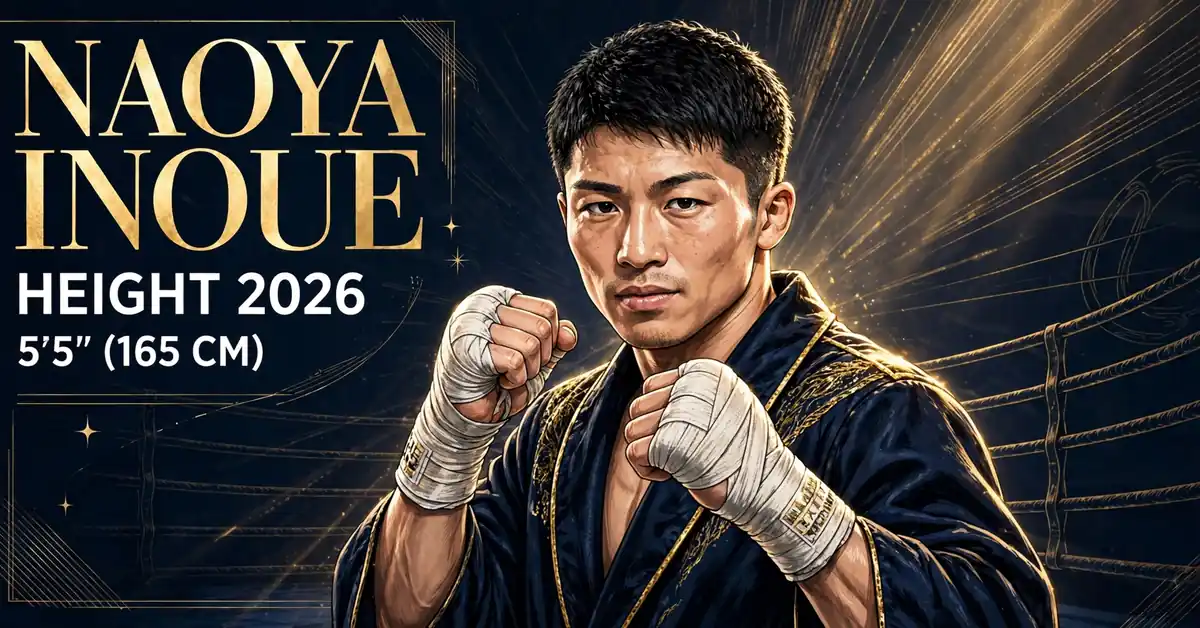
Naoya Inoue is 5 feet 5 inches tall (165 cm). The undisputed super-bantamweight champion is short for a pound-for-pound king — but 27 knockouts say otherwise.
Last updated: November 15, 2026 · By Nathan Cole
Naoya Inoue is 5 feet 5 inches tall (165 cm). The Japanese boxer known as “The Monster” stands 5-foot-5 in shoes-off official listings, with a reach of 67.5 inches (171 cm), and he fights at the 122-pound super-bantamweight limit. He is 33 years old in 2026, undefeated at 33-0 with 27 knockouts, the undisputed super-bantamweight champion, and the No. 1 pound-for-pound fighter in the sport according to The Ring.
That combination — 5-foot-5 and the best fighter alive — is why the height question never goes away. Boxing fans see a man who would be short in most rooms, then watch him stop opponents who tower over him. This article answers the height question first, then walks through every part of the story it touches: how his height compares with the men he has beaten, how a 5-foot-5 fighter built an 81.8 percent knockout rate, the four weight classes he conquered, the Tokyo Dome night he beat a taller rival in May 2026, and what his height means for the fights still ahead of him.
One note on sources before the details: Inoue’s height is not disputed anywhere. Wikipedia, BoxRec, and Boxing Only all list 5 feet 5 inches (165 cm), and his reach is listed identically at 67.5 inches. Where outlets disagree — his net worth, the exact purse for the Nakatani fight — this article says so and names the outlet behind each figure.
Quick Facts
| Full Name | Naoya Inoue (井上 尚弥) |
| Height | 5 ft 5 in (165 cm) |
| Reach | 67.5 in (171 cm) |
| Age in 2026 | 33 years old (born April 10, 1993, Zama, Kanagawa, Japan) |
| Weight Class | Super bantamweight (122 lb / 55.3 kg) |
| Stance | Orthodox |
| Nickname | “The Monster” |
| Record | 33-0, 27 KOs (81.8% knockout rate) |
| Titles | Undisputed super-bantamweight champion; former undisputed bantamweight champion; world champion in four weight classes |
| Trainer | Shingo Inoue (his father) |
| Last Fight | Beat Junto Nakatani by unanimous decision, Tokyo Dome, May 2, 2026 |
| Net Worth (2026) | Estimated $7 million–$15 million (sources disagree; see the money section) |
How This Height Was Verified
Inoue’s height — 5 feet 5 inches, 165 cm — appears identically in his Wikipedia biography, his BoxRec profile, and Boxing Only’s fighter profile, and his reach is listed at 67.5 inches (171 cm) in the same sources. Opponent heights in this article come from the same standard listings: Junto Nakatani at 5 feet 7 inches (170 cm) per the WBC’s official fight preview, and Nonito Donaire at 170 cm per BoxRec. His record, 33-0 with 27 knockouts, is taken from BoxRec and Box.Live reporting dated November 2026, and the May 2, 2026 Nakatani result and scorecards come from BBC Sport and BetVictor’s fight coverage. Net-worth figures are drawn from Surprise Sports (updated October 10, 2026), iFANN, TheCityCeleb, and BoxerWorth, and the article publishes them as a range because the outlets do not agree. Where a figure is reported rather than confirmed — the Nakatani purse, the older career-earnings totals — the article names the outlet that reported it.
+
How Tall Is Naoya Inoue in 2026?
Naoya Inoue is 5 feet 5 inches tall. In metric terms, that is 165 centimeters. The figure has not changed across his career — he was listed at 5-foot-5 when he won his first world title in 2014, and he is listed at 5-foot-5 now, at 33, as the undisputed super-bantamweight champion.
For readers doing the conversion in their heads: 5 feet 5 inches is 65 inches in total. It is 5.42 feet. In centimeters it is 165, which is how Japanese coverage usually prints it. Inoue weighs in at the super-bantamweight limit of 122 pounds (55.3 kg) for his fights, and he walks around only a few pounds above that between camps.
His reach is the number that matters more inside the ring. Inoue’s reach is 67.5 inches (171 cm) — two and a half inches longer than his height. That is an unusual ratio. Most fighters have a reach roughly equal to their height; Inoue’s arms are long for his frame, and that extra length is one of the quiet reasons his height has never cost him a fight. He can touch opponents from a distance where their longer arms should, on paper, keep him out.
Naoya Inoue’s Height in Feet, Inches, and Centimeters
The height question gets asked in three different units, so here are all of them in one place. Inoue is 5 feet 5 inches. He is 165 centimeters. He is 1.65 meters. His reach is 67.5 inches, or 171 centimeters. His fighting weight is 122 pounds, or 55.3 kilograms.
Those numbers are consistent across every major source. Wikipedia lists his height as 5 feet 5 inches (165 cm) and his reach as 67.5 inches (171 cm). BoxRec lists the same measurements: 165 cm tall, 171 cm reach. Boxing Only’s profile agrees: 5 feet 5 inches, 165 cm, reach 67 inches in their rounding. There is no competing figure. Nobody credible lists Inoue at 5-foot-6 or 5-foot-4. The 5-foot-5 number is one of the least disputed facts in boxing.
That consistency is worth noting because boxing heights are often fudged. Promoters round up. Fighters get listed taller on posters than on medical forms. Inoue has never needed the rounding. His record does the talking, and at 5-foot-5 he has beaten men listed at 5-foot-7 and taller without the height ever becoming the story of the fight — because he wins before it can.
How Inoue’s Height Compares to His Biggest Opponents
Inoue has spent his career giving away height. Almost every significant opponent he has faced was taller than him, and the gap has often been two inches or more. The table below lines up the numbers that were actually on the tale of the tape.
| Naoya Inoue | 5 ft 5 in (165 cm) · Reach 67.5 in (171 cm) |
| Junto Nakatani | 5 ft 7 in (170 cm) · Reach 67 in (170 cm) — 2 in taller, May 2, 2026, Inoue won UD 12 |
| Nonito Donaire | 5 ft 7 in (170 cm) · Reach 68.5 in (174 cm) — 2 in taller, beaten twice (2019, 2022) |
| Stephen Fulton | Listed taller than Inoue — beaten by TKO 8, July 25, 2023, in Tokyo |
| Marlon Tapales | Listed taller than Inoue — beaten by KO 10, December 26, 2023, for the undisputed crown |
The Nakatani fight is the cleanest example. Nakatani is 5-foot-7, two inches taller than Inoue, and he came into the Tokyo Dome on May 2, 2026, unbeaten at 32-0. The fight was billed as the biggest in Japanese boxing history, two undefeated pound-for-pound stars meeting for Inoue’s undisputed titles. Inoue won by unanimous decision, 116-112 on two cards and 115-113 on the third. The two-inch gap never decided anything. Inoue’s timing did.
Donaire is the other telling case. The Filipino legend is 5-foot-7 with a 68.5-inch reach — a full inch longer than Inoue’s reach, the rare opponent who out-reached him as well as out-heighted him. Inoue beat him twice: a unanimous decision in the World Boxing Super Series final in November 2019, a fight many called the best of that year, and a second-round knockout in the rematch on June 7, 2022. Two inches of height, one inch of reach, and both fights went to the shorter man.
That pattern runs through his whole record. BoxRec’s championship log shows Inoue is 16-0 with 13 knockouts against former or current world champions, and 25 opponents beaten in world-title bouts, 21 of them by knockout. Almost all of them were taller than him. Height, in his division, turns out to be a footnote. Timing, power, and footwork are the whole story.
How Inoue’s Height Compares to Other Champions
Put Inoue next to the other big names in boxing and the gap gets dramatic. Tyson Fury is listed at 6 feet 9 inches — sixteen inches taller than Inoue. Anthony Joshua is listed at 6 feet 6 inches. Oleksandr Usyk is listed at 6 feet 3 inches. Those are heavyweights, so the comparison is a fun one rather than a fair one: a heavyweight’s height comes with 100 extra pounds of mass.
The fairer comparisons sit in the lighter divisions. Terence Crawford is listed at 5 feet 8 inches, three inches taller than Inoue. Canelo Alvarez is listed at 5 feet 7.5 inches, two and a half inches taller. Gervonta Davis is listed at 5 feet 5.5 inches — half an inch taller than Inoue, and the closest thing to a height twin among the sport’s pound-for-pound names. Davis, like Inoue, built his reputation on stopping bigger men.
The point of the comparison is not that short fighters cannot win. It is that boxing sorts fighters by weight, not height, and inside a weight class, height is only one variable. Inoue weighs the same 122 pounds as his opponents. He carries the same mass. What he does with it — the snap in his punches, the way he closes distance, the angles he finds — has made the height column irrelevant in 33 straight fights.
Why 5-Foot-5 Has Never Been a Problem: The Power Question
British Boxing News put the paradox plainly in August 2026: Inoue stands 5-foot-5 and fights around 122 pounds, yet has stopped roughly 90 percent of his opponents in some stretches of his career. The exact career number is 27 knockouts in 33 wins, an 81.8 percent knockout rate. Either way, it is a rate heavyweights would envy, posted by a man who would be the shortest person in most heavyweight dressing rooms.
The power comes from mechanics, not mass. Inoue turns his whole body into his punches — the feet plant, the hips rotate, the shoulder snaps — and he lands with the kind of timing that makes the punch arrive before the opponent’s guard is set. His most famous weapon is a left hook to the body that has folded world champions. Against Luis Nery in May 2024, he was knocked down in the first round — the first time in his career he had touched the canvas — then got up and stopped Nery in the sixth. Against Ramon Cardenas in May 2025, he was knocked down again in the second round, then stopped Cardenas in the eighth. The pattern is the same both times: a taller man lands something early, and Inoue answers by ending the fight.
His amateur record tells the same story in miniature. Inoue went 75-6 as an amateur with 48 knockouts, and he holds an amateur knockout win over Kenshiro Teraji, who went on to become a world champion himself. The power was there before he turned professional at 19. It was there when he won his first world title in his sixth pro fight. It has been there in every weight class he has touched, from 108 pounds to 122.
There is also a defensive side to being 5-foot-5 that rarely gets mentioned. A shorter fighter presents a smaller target. Inoue slips punches by moving his head inches, not feet, and his low center of gravity makes him hard to push off balance. Taller opponents have to punch down at him, which shortens their own reach advantage and opens their bodies. Inoue has spent fourteen professional years turning that geometry into knockouts.
Early Life in Zama: Boxing Before Age Eight
Naoya Inoue was born on April 10, 1993, in Zama, a city in Kanagawa prefecture, Japan. He grew up in a boxing household. His father, Shingo Inoue, was a former amateur boxer who became a coach, and Naoya started training before he was eight years old — younger than most children start organized sport of any kind. His younger brother, Takuma, followed him into the gym, and his older cousin, Koki Inoue, did the same. The Inoue family is, in the plainest sense, a boxing family: father as trainer, two sons as professional fighters, a cousin in the sport too.
Shingo has trained Naoya from the first day to the present. That is unusual at the top of the sport, where fighters usually cycle through famous trainers as their careers grow. Inoue never did. His father has been in his corner for all 33 professional fights, and the trust between them is part of the story: a fighter who never had to learn a new trainer’s language, and a trainer who has known his fighter’s timing since the boy was small enough to need gloves made for children.
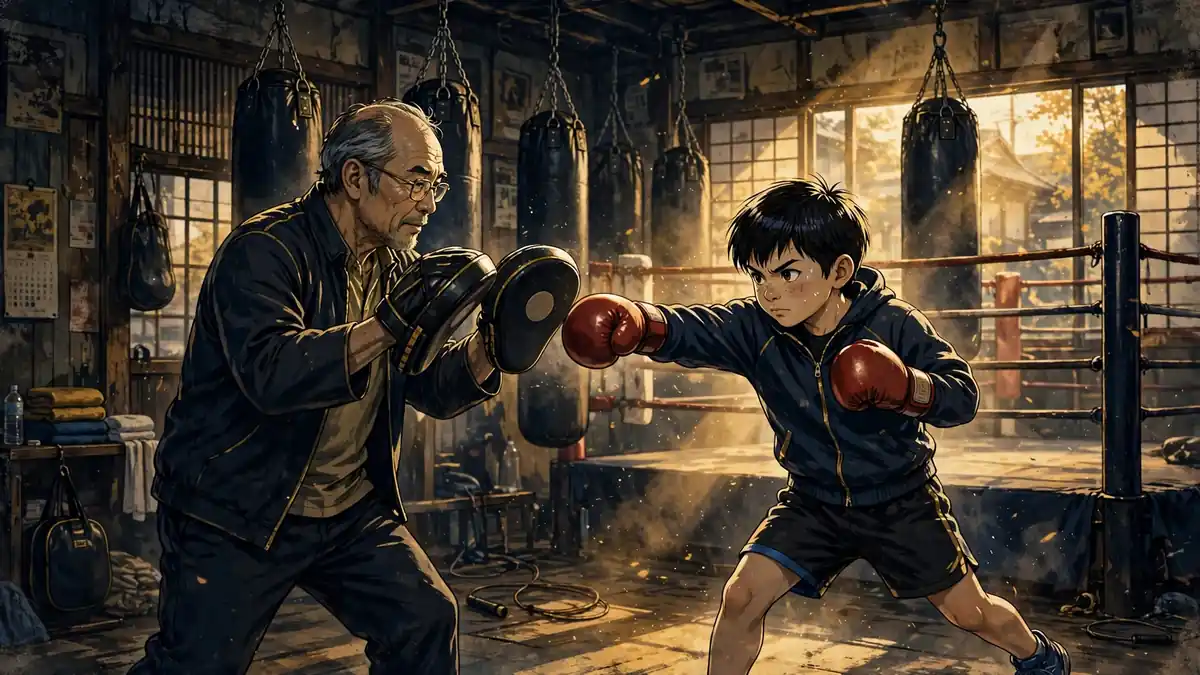
Zama itself is not a famous boxing town. It is a commuter city between Tokyo and the mountains, ordinary in every way except for the fighter it produced. Inoue’s rise did not come from a big-city gym or a famous promoter’s stable. It came from a father coaching his son in a small gym, and from a boy who turned out to be one of the most complete fighters of his generation.
The Amateur Years: 75-6 and a Win Over Teraji
Before he turned professional, Inoue compiled an amateur record of 75 wins and 6 losses, with 48 knockouts. That is a knockout rate of 64 percent in the amateurs, where headgear and short bouts usually keep stoppages rare. It is the first hard evidence that his power was not a professional accident. He was stopping people before he was old enough to vote.
His amateur medals tell the story in dates. In 2010, he took bronze at the Asian Youth Championships in Tehran, Iran. In July 2011, he won gold at the President’s Cup in Jakarta, Indonesia. In 2012, he took silver at the Asian Olympic Qualifier in Astana, Kazakhstan. He also won the Japanese Interscholastic Athletic Meeting and the Japanese Junior National Championships in 2009, and the Japanese Junior Selection Tournament in 2010.
One amateur result deserves its own line. Inoue holds an amateur knockout win over Kenshiro Teraji, who went on to become a two-division world champion and one of Japan’s best fighters of the same era. The two of them grew up in the same Japanese amateur system, and Inoue stopped him. It is a small detail that says a lot: the power that defines Inoue’s professional career was already ending fights against future world champions when he was a teenager.
He turned professional on October 2, 2012, at 19 years old. He did not need a long apprenticeship. His amateur record had already taught him everything a young professional needs: how to win rounds, how to finish hurt opponents, and how to handle the pressure of fighting for medals. The professional game was the same sport with longer rounds and no headgear. He was ready.
Pro Debut at 19 and the Fastest Rise in Japanese Boxing
Inoue’s professional rise was fast even by the standards of great fighters. He won the Japanese light-flyweight title on August 25, 2013, beating Ryoichi Taguchi — less than a year after his debut. Then, on April 6, 2014, in only his sixth professional fight, he beat Adrian Hernandez to win the WBC light-flyweight world title. Six fights to a world championship. Most fighters need twenty.
He did not stay at 108 pounds long. In December 2014, he moved up and beat Omar Narvaez to win the WBO super-flyweight title, and he held that belt until 2018. The pattern was set: Inoue would clean out a division, then move up and do it again. He was 21 years old and already a two-division world champion.
The speed of the rise matters for the height story too. At 108 and 115 pounds, Inoue was fighting men his own size or close to it. The height disadvantage grew as he moved up — bantamweight and super bantamweight opponents are bigger men — but the results never changed. He kept winning, kept stopping people, and kept collecting belts. By the time he reached 118 pounds, nobody was asking whether his height would hold him back. They were asking who could survive twelve rounds with him.
Four Weight Classes, Two Undisputed Crowns
Inoue is a world champion in four weight classes, and the only boxer to hold the undisputed championship at super bantamweight. The timeline runs like a checklist of dominance.
| 108 lb — Light flyweight | WBC title, April 6, 2014 (beat Adrian Hernandez, 6th pro fight) |
| 115 lb — Super flyweight | WBO title, December 2014 (beat Omar Narvaez), held to 2018 |
| 118 lb — Bantamweight | WBA title May 2018 (beat Jamie McDonnell); undisputed December 2022 (beat Paul Butler) |
| 122 lb — Super bantamweight | WBC + WBO titles July 25, 2023 (beat Stephen Fulton); undisputed December 26, 2023 (beat Marlon Tapales) |
The bantamweight run included the World Boxing Super Series tournament in 2018-19, which Inoue won by beating Juan Carlos Payano, Emmanuel Rodriguez, and Nonito Donaire in the final. The tournament gathered the best bantamweights in the world into a single bracket, and Inoue beat all three of his opponents in it. The Donaire final, in November 2019, was voted one of the best fights of the year: Donaire broke Inoue’s orbital bone and cut him badly, and Inoue still won the decision.
Moving up to 122 pounds in 2023 was supposed to be the test. Super bantamweights are bigger, stronger men, and Fulton was the unified champion, unbeaten and awkward. Inoue stopped him in eight rounds in Tokyo on July 25, 2023. Five months later, on December 26, 2023, he stopped Marlon Tapales in ten rounds to become undisputed at a second weight. No other fighter in history has held the undisputed super-bantamweight championship. Inoue has held it since 2023, and he has defended it six times.
The Donaire Wars: Beating a Taller Legend Twice
Nonito Donaire is the opponent who best explains what Inoue’s height does and does not mean. Donaire, the “Filipino Flash,” is 5-foot-7 with a 68.5-inch reach. He was a four-division world champion, a future Hall of Famer, and the only man to take Inoue to the edge of defeat. He is also, on paper, the worse matchup: taller, longer, and just as dangerous a puncher.
The first fight, on November 7, 2019, in Saitama, was the final of the World Boxing Super Series. Donaire fractured Inoue’s right orbital bone in the second round and opened a bad cut over his right eye. Inoue fought the rest of the fight half-blind on one side and still won a unanimous decision, dropping Donaire in the eleventh round. It was the hardest fight of Inoue’s career, and it was against a taller man who hit him with everything he had.
The rematch, on June 7, 2022, also in Saitama, lasted two rounds. Inoue knocked Donaire down twice and stopped him in the second, unifying the bantamweight titles. The contrast between the two fights is the whole lesson: the first time, height and reach kept Donaire competitive for twelve rounds. The second time, Inoue had solved the puzzle, and the puzzle stayed solved. Taller opponents do not get better against Inoue with a second look. They get worse.
Fulton, Tapales, and the Second Undisputed Crown
Stephen Fulton was the test case for the move to 122 pounds. The American was unbeaten, held the WBC and WBO super-bantamweight titles, and was known for a slick, hard-to-hit style. The fight, on July 25, 2023, at the Ariake Arena in Tokyo, was supposed to be a chess match. Inoue turned it into a demolition. He dropped Fulton in the eighth round and stopped him moments later, taking both belts in his first fight at the weight.
Marlon Tapales, the Filipino who held the IBF and WBA titles, was next. On December 26, 2023, in Tokyo, Inoue knocked him out in the tenth round to become the undisputed super-bantamweight champion — the first fighter ever to hold all four belts at 122 pounds, and the second undisputed crown of Inoue’s career after bantamweight. He had now been undisputed in two divisions, in the space of a year.
Both wins came against taller men, and both ended inside the distance. That is the pattern of Inoue’s career in one sentence: the height gap is real, the reach gap is sometimes real, and neither one has ever saved his opponent.
The Nakatani Fight: Height, Reach, and the Tokyo Dome
May 2, 2026, at the Tokyo Dome, was the biggest night of Inoue’s career, and the height numbers were printed on every preview. Junto Nakatani, 5-foot-7 with a 67-inch reach, unbeaten at 32-0, a three-division champion moving up to challenge for Inoue’s undisputed super-bantamweight crown. Two undefeated Japanese pound-for-pound stars, the biggest all-Japanese fight in the sport’s history, in a stadium that holds 55,000 people.
Inoue won by unanimous decision: 116-112 on two judges’ cards, 115-113 on the third. It was his first decision win in a run of fights that had mostly ended early, and it was the most complete performance of his career in some ways — twelve rounds of control against a taller, younger, unbeaten rival who had never lost a fight. The record moved to 33-0. The undisputed titles stayed in Tokyo.
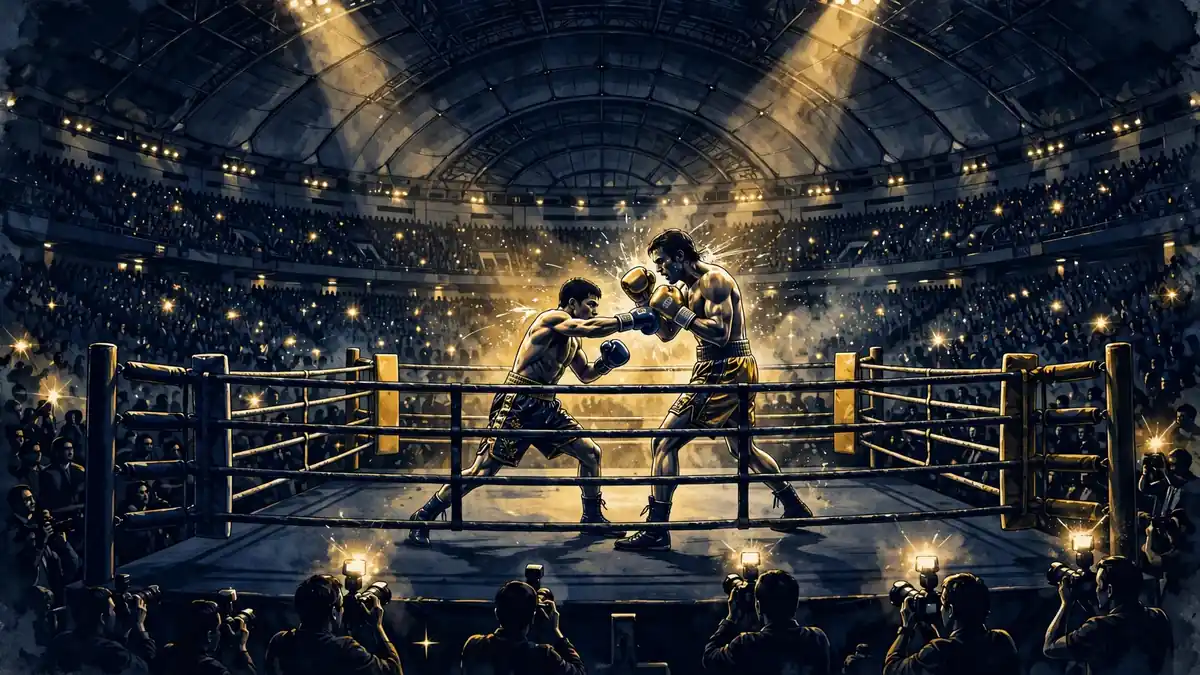
What the fight proved, for the height question, is that Inoue’s game has a second gear. He did not need a knockout to beat a taller man. He out-boxed Nakatani over twelve rounds, winning rounds with timing and accuracy rather than power. A fighter who can only win by knockout is a fighter whose height will eventually cost him a decision. Inoue can win both ways, and the Nakatani fight is the proof.
2025-26: Four Fights, One Megafight, and a Quiet Second Half
Inoue fought four times in 2025, then opened 2026 with the Nakatani megafight. The run started in Las Vegas on May 4, 2025, against Ramon Cardenas: Inoue was knocked down in the second round, got up, and stopped Cardenas in the eighth. It continued in Nagoya on September 14, 2025, with a unanimous decision over Murodjon Akhmadaliev, only the fourth fight of his career not won by knockout. It moved to Riyadh on December 27, 2025, where he outpointed Alan David Picasso over twelve dominant rounds, 119-109, 120-108, and 117-111. And it peaked at the Tokyo Dome on May 2, 2026, with the Nakatani win.
Since then, it has been quiet. As of October 2026, no next fight had been officially announced, according to BetVictor’s fight coverage. The talk around Inoue has two threads: a fight with Jesse “Bam” Rodriguez, the American star who has been calling for the matchup, and a move up to featherweight (126 pounds), which would make Inoue a five-division world champion. Boxing247 reported in October 2026 that Inoue was preparing for a move to featherweight rather than waiting for Rodriguez.
Either path raises the height question again. At featherweight, the opponents get taller still — the division’s champions are routinely 5-foot-7 and above. Inoue has answered that question at every weight so far. If he moves up, he will be the shortest man in the division again, and the betting will still favor him, because 33 fights have taught the sport that his height is the least important number on the tale of the tape.
Net Worth and Fight Purses in 2026
An article about Inoue’s height still has to answer the money question, because his size is part of why his earnings look the way they do: he is a pound-for-pound star in the lightest divisions, where purses have always been smaller than at heavyweight. His net worth in 2026 is estimated at $7 million to $15 million, and the range exists because the outlets publishing the figure do not agree with each other.
Surprise Sports, updated October 10, 2026, puts the figure at $7 million. TheCityCeleb lists $12 million. iFANN and BoxerWorth both list $15 million. One profile published in August 2026 puts the range at $15 million to $25 million. The honest anchor is the range, not any single number: the $7 million figure is the most-cited one, but it predates the Nakatani fight, and the higher figures reflect the bigger purses of the last two years.
The career-earnings picture is clearer. Surprise Sports reports that Inoue has earned approximately $57 million across his career, with about $35 million of that coming at bantamweight. His biggest single payday, by the reporting available, was the Nakatani fight on May 2, 2026 — a Tokyo Dome card that grossed more than $30 million at the gate, with TheSportster reporting Inoue’s purse at somewhere between $12 million and $20 million. Earlier reported purses were smaller: about $5 million for the Stephen Fulton win in July 2023, and roughly $1 million each for the Paul Butler and Marlon Tapales wins, per the aggregator sites that track them.
His income is not only purses. His confirmed sponsors include SIXPAD, the fitness technology brand also associated with Cristiano Ronaldo, and Winning Japan, the long-established boxing glove and equipment maker, according to Sportskeeda’s reporting on his sponsorship portfolio. Riyadh Season, the Saudi boxing venture, has also sponsored his recent fights, including the Picasso bout in December 2025. Readers looking for more celebrity wealth profiles can browse the Celebrity Net Worth category for the full archive.
One thing the reporting agrees on: there is no reliable public record of major real estate, vehicles, or other personal assets owned by Inoue, and he does not own or operate a gym or a separate business venture. His money comes from fight purses and sponsorship contracts. The Nakatani purse, if the reported $12 million to $20 million range is right, was more than double his previous biggest night — and it is the reason the older $7 million net-worth figure should be treated as stale.
Personal Life: Wife, Children, and the Inoue Boxing Family
Inoue is married to his high-school sweetheart, and the couple has three children. He keeps his family life private — there are no reality-show appearances, no public social-media accounts full of family photos, and his wife’s name is not a matter of public record in the way a celebrity spouse’s usually is. What is public is the shape of it: a marriage that predates his fame, three children, and a home life in Japan that has stayed out of the boxing press.
The family that is public is the boxing family. His father, Shingo, is his trainer and has been since childhood. His younger brother, Takuma Inoue, is a professional boxer in his own right and a former bantamweight world champion — the two brothers have, at different times, held world titles in the same division. His older cousin, Koki Inoue, is also a professional boxer. It is one of the most concentrated boxing families in the sport: a father who coaches, two sons who fight for world titles, and a cousin in the same business.
Takuma’s career is worth a line on its own. He won the WBA bantamweight title and defended it, fighting at the same 118-pound weight where his older brother had been undisputed. The brothers have never fought each other, and nobody in the family has ever suggested they would. They train in the same gym, under the same father, and their careers run on parallel tracks — Naoya at the top of the sport, Takuma a world champion in his own right.
At 33, Inoue’s personal life is settled in a way that matches his professional life: stable, private, and built around the same people who were there at the start. His father still trains him. His brother still fights. His wife and children stay out of the spotlight. The only public drama in his life is the kind that happens inside a boxing ring.
Does Height Matter in Boxing? What the Numbers Say
The honest answer is that height matters less than reach, and reach matters less than timing. Inoue is 5-foot-5 with a 67.5-inch reach. Nakatani is 5-foot-7 with a 67-inch reach — taller by two inches, shorter in reach by half an inch. Donaire is 5-foot-7 with a 68.5-inch reach — taller and longer. Inoue beat both men. The reach column, not the height column, is the one that decides how a fight feels, and Inoue’s reach is long for his height.
Boxing history is full of short champions. Mike Tyson was 5-foot-10 in a heavyweight division of 6-foot-4 men. Manny Pacquiao was 5-foot-5.5 at welterweight, fighting men four inches taller. Roberto Duran was 5-foot-7 at lightweight. The sport sorts by weight, and inside a weight class, the fighters who win are the ones with the best timing, the best defense, and the best punch selection. Height is an advantage only if the taller fighter knows how to use it — and using it means keeping the shorter man at the end of a jab for twelve rounds, which is exactly what Inoue’s footwork does not allow.
Inoue’s footwork is the mechanism. He cuts the ring off in small steps, never lunging, never chasing. He gets inside the taller man’s jab by stepping at angles, not straight lines, and once he is inside, the height advantage reverses: the taller man cannot punch down effectively at close range, and Inoue’s hooks and uppercuts arrive from underneath the guard. It is a style built for a 5-foot-5 fighter, and it has worked in 33 straight fights.
There is one place height does matter: when the shorter fighter cannot get inside. That has happened to Inoue exactly never in a losing sense — he has never lost — but it happened in moments. Donaire’s jab troubled him in the first fight. Akhmadaliev’s movement took him the distance in September 2025. Picasso’s height and movement took him twelve rounds in Riyadh. Those fights are the closest thing to a blueprint for beating Inoue, and the blueprint still ends with Inoue’s hand raised.
The final number is the one that settles the question. Inoue is 33-0. He has held world titles in four weight classes. He has been undisputed in two. He is the No. 1 pound-for-pound fighter in the sport. He is 5 feet 5 inches tall. Those five facts have been true at the same time for years now, and they will stay true together until somebody beats him — which, at 33, nobody has managed to do.
Sources & Reporting
This article was researched on November 15, 2026, from live reporting: Wikipedia, BoxRec, and Boxing Only for the height (5 ft 5 in / 165 cm), reach (67.5 in / 171 cm), birth date, amateur record (75-6, 48 KOs), and title history; the WBC’s official fight preview for Junto Nakatani’s height (5 ft 7 in / 170 cm) and reach; BoxRec for Nonito Donaire’s height (170 cm) and reach (174 cm); BBC Sport and BetVictor for the May 2, 2026 Nakatani result, scorecards (116-112, 116-112, 115-113), and the record of 33-0 with 27 knockouts; Box.Live and Boxing247 for the recent fight log (Cardenas, Akhmadaliev, Picasso, Nakatani) and the October 2026 reporting on the Bam Rodriguez and featherweight talk; British Boxing News (August 28, 2026) for the analysis of Inoue’s power relative to his size; Surprise Sports (updated October 10, 2026), iFANN, TheCityCeleb, and BoxerWorth for the net-worth estimates; and TheSportster, via purse reporting, for the Nakatani payday. Where sources disagreed — the net-worth estimates, the exact Nakatani purse — the article names the disagreement instead of picking a number silently. Corrections are welcome via the About page.
Frequently Asked Questions
How tall is Naoya Inoue?
Naoya Inoue is 5 feet 5 inches tall (165 cm). His reach is 67.5 inches (171 cm), which is two and a half inches longer than his height.
How tall is Naoya Inoue in cm?
Naoya Inoue is 165 cm tall. In meters, that is 1.65 m. His reach is 171 cm.
How much does Naoya Inoue weigh?
Naoya Inoue fights at the super-bantamweight limit of 122 pounds (55.3 kg). He is the undisputed super-bantamweight champion and walks around only a few pounds above the limit between camps.
What is Naoya Inoue’s reach?
Naoya Inoue’s reach is 67.5 inches (171 cm). His arms are long for his frame, and the extra length helps him land from a distance where taller opponents expect to keep him out.
Is Naoya Inoue short for a boxer?
Naoya Inoue is short for a professional boxer at 5 feet 5 inches, and most of his major opponents have been taller than him — Junto Nakatani and Nonito Donaire are both 5 feet 7 inches. But he is undefeated at 33-0 with 27 knockouts, so his height has never cost him a fight.
How tall is Junto Nakatani compared to Naoya Inoue?
Junto Nakatani is 5 feet 7 inches tall (170 cm), two inches taller than Naoya Inoue at 5 feet 5 inches. Inoue beat Nakatani by unanimous decision at the Tokyo Dome on May 2, 2026, with scorecards of 116-112, 116-112, and 115-113.
What is Naoya Inoue’s record?
Naoya Inoue’s professional record is 33-0 with 27 knockouts, an 81.8 percent knockout rate. He is a world champion in four weight classes and the undisputed super-bantamweight champion, and he is ranked No. 1 pound-for-pound by The Ring.
What is Naoya Inoue’s net worth in 2026?
Naoya Inoue’s net worth in 2026 is estimated at $7 million to $15 million, with sources disagreeing: Surprise Sports lists $7 million, TheCityCeleb lists $12 million, and iFANN and BoxerWorth list $15 million. His career earnings are reported at approximately $57 million, and his May 2026 fight with Junto Nakatani reportedly paid him $12 million to $20 million.
Nathan Cole
Nathan Cole is the editor of Guide Net Worth. He covers celebrity wealth the way a business desk covers earnings: reported figures first, estimates labeled as estimates, no invented numbers. Every profile passes through his desk before it publishes. About Guide Net Worth · Corrections: figures are updated when new reporting emerges — contact us via the About page if you spot an error.
References & Sources
This article has been fact-checked and verified against multiple public sources, financial disclosures, SEC filings, Forbes reports, Celebrity Net Worth databases, and official records. All net worth estimates are based on publicly available information and financial analysis.