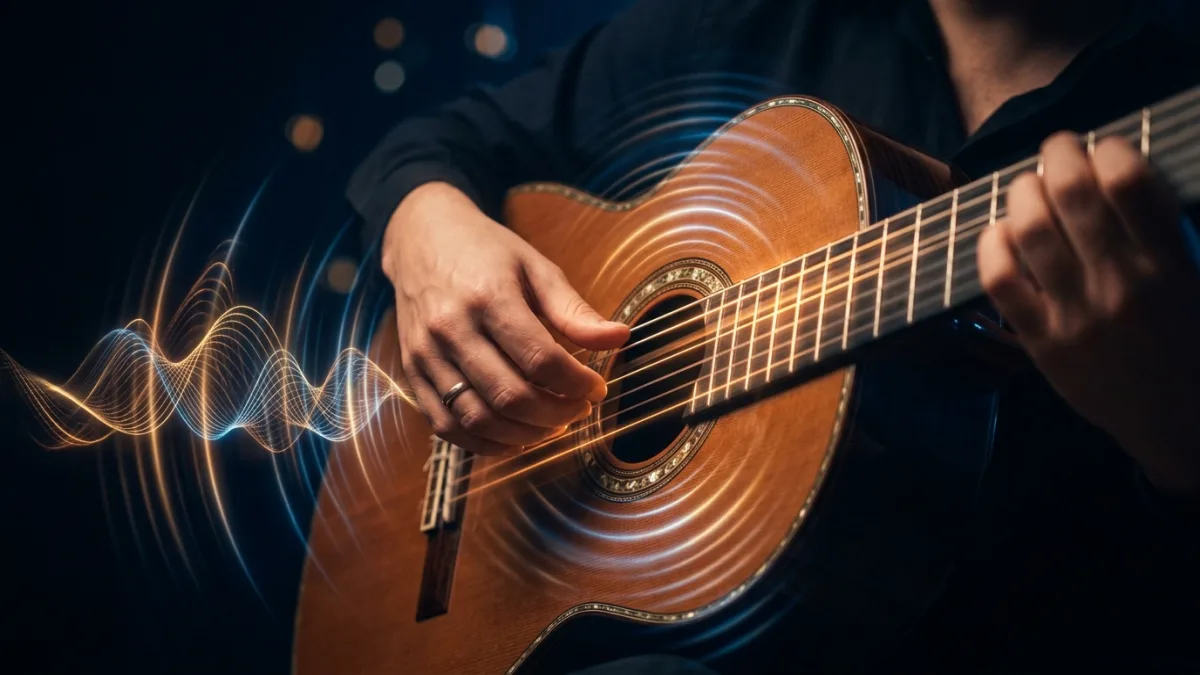
Pulsamento is a descriptive concept referring to a continuous, repeating rhythmic pulse, vibration, or internal flow that animates sound, physical movement, and creative expression. While it has gained recent traction across digital publications, music forums, and lifestyle journals, pulsamento is not an officially standardized English term or formal medical condition. Instead, it functions as an evocative loanword rooted in Romance language morphology, bridging the physical sensation of a heartbeat with the driving metric momentum of an acoustic performance.
Because the term appears across widely divergent fields—from classical guitar right-hand string plucking to natural wave oscillation and biological rhythms—readers frequently ask whether pulsamento denotes a technical music-theory rule, a medical syndrome, or a philosophical metaphor. To clear up this ambiguity, we must examine its linguistic etymology, musical applications, physiological comparisons, and exact semantic boundaries.
Pulsamento Quick Reference Snapshot
- Core Definition: A repeating pulse, steady cadence, rhythmic flow, or continuous vibration that gives structure to movement or sound.
- Linguistic Origin: Derived from the Latin verb pulsare (“to strike, beat, or drive”) combined with the Romance suffix -mento (denoting an active process or result).
- Primary Contexts: Music performance (rhythmic foundation & guitar plucking), physical acoustics (wave oscillation), biological cycles (heartbeat & breath), and visual artistic flow.
- Formal English Status: Non-standard descriptive term; English technical vocabularies preferentially use pulse, pulsation, meter, cadence, or tempo.
- Medical Reassurance: Pulsamento is not a medical disease, clinical diagnosis, or cardiovascular disorder.
+
Understanding the Basic Meaning of Pulsamento
In simple terms, pulsamento describes the sensation of continuous, patterned activity that moves forward through time. Unlike an isolated acoustic sound or a static visual point, pulsamento requires recurrence: a second following a first, establishing a recognizable cadence that the human brain can anticipate and follow.
Consider the rhythmic tick of a mechanical grandfather clock, the steady thump of a bass drum driving a concert hall, or the predictable ebb and flow of tidal breakers against a shoreline. Each of these phenomena exhibits a living pulse. When writers employ the term pulsamento, they are attempting to capture not merely the math of a metronome, but the organic, felt vitality behind the pattern.
Is Pulsamento a Standard English Word?
No, pulsamento is not recognized as a standard lexical entry in major English dictionaries such as the Oxford English Dictionary, Merriam-Webster, or the American Heritage Dictionary. In formal English writing, established equivalents like pulse, pulsation, beat, and rhythmic drive are universally preferred.
Linguistically, pulsamento is a Romance construct. It mirrors Italian words like battimento (acoustic beating) and movimento (movement), drawing from the Latin verb pulsare. In Spanish and Portuguese, related roots appear in terms like pulsación (the act of plucking or pulsing). Its appearance in contemporary English web writing represents an informal loan-concept—used by creative essayists, lifestyle writers, and musicians seeking a more poetic or expressive word to articulate kinetic momentum.
Pulsamento and Its Core Connection with Rhythm
While rhythm and pulsamento are closely related, they represent distinct layers of temporal organization. Rhythm is the architectural arrangement of durations—notes, pauses, and accents grouped into structured patterns. Pulsamento, by contrast, is the underlying engine that powers that architecture.
Imagine an orchestral performance where a composer writes complex syncopations and uneven melodic flourishes. If the musicians lose the steady internal pulse beneath those syncopations, the composition falls apart into chaotic noise. Pulsamento represents that unshakeable internal grid—the steady anchor that allows intricate rhythms to breathe, develop tension, and resolve naturally.
Pulsamento in Music: From Acoustic Physics to Guitar Playing
Music is the natural home of the pulsamento concept. Within musical performance, the term surfaces across two primary dimensions: macro-level rhythmic coherence and micro-level instrumental technique.
At the macro level, every engaging piece of music possesses an internal groove. Whether it is an acoustic folk ballad, a classical concerto, or modern electronic production, this underlying pulse creates what musicians describe as “forward motion.” It is what causes listeners to nod their heads or tap their feet without actively counting time signatures.
The Classical & Flamenco Guitar Connection
In classical and flamenco guitar traditions, instructors frequently reference pulsación—the physical mechanics of the right hand striking the nylon strings. Some bilingual instructors and online commentary adapt this into “pulsamento” when describing:
- Apoyando (Rest Stroke): The finger strikes a string and comes to rest firmly against the adjacent string, creating a full, resonant, and driving pulse.
- Tirando (Free Stroke): The finger plucks the string upwards into the palm without touching the next string, producing an airy, rhythmic cadence.
- Acoustic Beating (Interference): When two strings vibrate at nearly identical frequencies, their overlapping sound waves produce a physical sensation of throbbing or pulsation that the guitarist feels directly through the instrument’s soundboard and neck.
This physical, tactile feedback between wood, vibrating string, and human fingertips exemplifies the tangible reality of pulsamento in music performance. For an analysis of how master musicians leverage relentless rhythmic discipline into historic global careers, see our study on Beyoncé’s career and musical legacy.
Pulsamento vs. Pulse vs. Rhythm vs. Pulsation: What’s the Difference?
Because these terms frequently blur together in conversational writing, reviewing their precise technical definitions provides valuable clarity:
| Term | Formal Definition | Primary Domain | Standardized in English? |
|---|---|---|---|
| Pulsamento | The felt sensation of continuous, repeating rhythmic pulse or flow | Descriptive Writing, Music, Philosophy | No (Informal Loan-Concept) |
| Pulse | A regular, recurring beat or throbbing surge of energy or pressure | Medicine, Physics, Music Theory | Yes (Standard Academic & Medical) |
| Rhythm | A systematic arrangement of musical sounds according to duration and stress | Music Theory, Poetry, Linguistics | Yes (Core Theoretical Pillar) |
| Pulsation | The physical act of pulsating; rhythmic throbbing, expansion, or contraction | Astronomy, Biology, Fluid Dynamics | Yes (Formal Scientific Standard) |
| Tempo | The exact speed or pace of a musical piece, measured in Beats Per Minute (BPM) | Music Performance & Composition | Yes (Standard International Term) |
Pulsamento and the Human Body: Medical Clarification
Online discussions occasionally link pulsamento with bodily sensations, such as blood circulation, chest throbbing, or neural impulses. It is critical to state clearly: pulsamento is not a recognized medical term, clinical diagnosis, or medical condition.
The human body relies heavily on rhythmic homeostatic cycles:
- The Cardiac Cycle: The heart pumps blood through alternating contractions (systole) and relaxations (diastole), generating an arterial pulse.
- Respiratory Rhythm: The lungs expand and contract in a periodic cycle governed by the brainstem’s autonomic nervous system.
- Circadian Rhythms: Biological cycles regulating hormone release, body temperature, and sleep cycles over approximately 24-hour periods.
While writers may use pulsamento poetically to describe these life forces, anyone experiencing physical symptoms such as irregular palpitations, persistent throbbing, dizziness, or a rhythmic buzzing in the ears should consult a medical professional using certified clinical terms such as pulsatile tinnitus, arrhythmia, or tachycardia.
Pulsamento in Nature and Physical Systems
Nature is replete with repeating patterns that inspire the concept of pulsamento. When physical forces interact over geographic space and time, they generate predictable cyclical motion.
Ocean swells provide the most vivid physical manifestation. Waves travel thousands of miles across open seas before breaking in rhythmic succession along coastal shelves. Similarly, seasonal cycles, the periodic flash of bioluminescent fireflies, and acoustic wind resonance through mountain canyons illustrate how natural systems self-organize into pulsing rhythms. In physics, this behavior is rigorously studied through oscillation, harmonic frequencies, and wave mechanics.
Pulsamento in Art, Cinema, and Creative Expression
Beyond acoustic sound, creative practitioners in non-musical disciplines utilize rhythm to structure viewer experiences. In visual art, repetition of geometric shapes, contrasting color palettes, and directional brushstrokes create what painters call “visual cadence.”
In cinematography and film editing, pulsamento describes the pacing of cuts and camera movement. A high-energy sequence uses rapid, syncopated cuts to build adrenaline, while an introspective drama uses long, rhythmic camera pans to create contemplative breathing room. Across every medium, pulsamento represents the animating rhythm that prevents a creative work from feeling rigid, static, or lifeless.
Common Misunderstandings About Pulsamento
As unfamiliar terms circulate through modern search engines, several misconceptions routinely emerge:
- Misconception: Pulsamento is a rare medical disorder. Reality: It has no medical validity. Certified medicine relies on terms like arterial pulse, vasodilation, or vascular pulsations.
- Misconception: It is a formal music conservatory rule. Reality: Music theory relies on standardized terms like meter, tactus, tempo, and syncopation. Pulsamento is an informal descriptive descriptor.
- Misconception: It refers exclusively to classical guitar. Reality: While guitarists sometimes reference string-plucking pulsation, the term is applied equally to literature, nature, and acoustics.
How to Understand Pulsamento in Everyday Life
Ultimately, the easiest way to conceptualize pulsamento is as the feeling of rhythm in action. It is the steady heartbeat of a song that keeps your attention engaged, the reliable cycle of waves rolling onto a shore, or the internal discipline that keeps a daily routine moving forward.
Language continually evolves through descriptive experimentation. While formal fields like medicine and physics demand rigid technical precision, expressive writing benefits from words that evoke sensory experience. Pulsamento serves exactly that purpose: capturing the living, pulsing motion that connects sound, art, nature, and human consciousness.
To explore how elite performers master kinetic discipline across different life arenas, see our comparative study on Audrey Hepburn and Michael Phelps’ shared dedication, as well as our guide on financial benchmarks and lifestyle security.
References & Sources
This article has been fact-checked and verified against multiple public sources, financial disclosures, SEC filings, Forbes reports, Celebrity Net Worth databases, and official records. All net worth estimates are based on publicly available information and financial analysis.