Aamir Khan biography 2026: the 61-year-old perfectionist — from Yaadon Ki Baaraat to Dangal, a $220M fortune, three marriages, awards and his 2025 comeback.
Last updated: November 17, 2026 · By Nathan Cole
Aamir Khan is 61 years old in 2026. He was born Mohammed Aamir Hussain Khan on March 14, 1965, in Bombay, and he turned 61 on March 14, 2026. His net worth is estimated at about $220 million, inside a $200–235 million range that reflects how differently outlets count his profit-share film deals, his production company, and his property. He is married to Gauri Spratt, his third wife, since July 5, 2026, and he is coming off a real box-office comeback: Sitaare Zameen Par, released June 20, 2025, grossed about ₹266 crore worldwide after two expensive flops had people asking whether his run was over.
The short version of the life is this. A boy from a film family appears on screen at eight, becomes a romantic star at 23, walks away from the industry’s star system to make one film at a time, produces an Oscar-nominated epic, directs a film about a dyslexic child that changes how India talks about learning disabilities, hosts the country’s most serious television show about social issues, builds a fortune by taking profit shares instead of fees, loses his way with two big-budget failures, and returns at 60 with a gentle sports comedy about a basketball team of players with Down syndrome. No other Indian star has a career shaped quite like that. The films are the record, and the record is what this biography follows, date by date.
This profile works from the documented record, with dates attached to every claim that carries one. Where sources disagree — his net worth, his height, the exact size of his biggest hits — the disagreement is shown rather than smoothed over. Where a figure comes from a single outlet, it is labeled that way. The marriage to Gauri Spratt, reported by Britannica in its October 29, 2026 update and confirmed by Pinkvilla, Filmfare, and GG2, is stated as fact. The money is labeled as estimates throughout, because no outlet has seen his accounts.
Quick Facts
| Full Name | Mohammed Aamir Hussain Khan |
| Born | March 14, 1965, Bombay (now Mumbai), India (age 61 in 2026) |
| Occupation | Actor, film producer, director |
| Known For | Lagaan, Taare Zameen Par, 3 Idiots, PK, Dangal, Sitaare Zameen Par |
| Height | 5 ft 5 in (165 cm) — most-cited figure; no official measurement |
| Estimated Net Worth | About $220 million, inside a $200–235 million range (see breakdown) |
| Production Company | Aamir Khan Productions (founded 1999) |
| Spouse | Gauri Spratt (married July 5, 2026); previously Reena Dutta (1986–2002), Kiran Rao (2005–2021) |
| Children | Junaid Khan, Ira Khan (with Reena Dutta); Azad Rao Khan (with Kiran Rao) |
| Awards | 9 Filmfare Awards, 4 National Film Awards, Padma Shri (2003), Padma Bhushan (2010) |
| Last Updated | November 17, 2026 |
How This Profile Was Put Together
This biography is built from the documented record, not from profile-site copies: Britannica’s Aamir Khan biography (updated October 29, 2026), Wikipedia’s sourced biography and awards list, Alux’s October 2026 net-worth valuation, Celebrity Net Worth (updated June 26, 2026), Pinkvilla’s July 6, 2026 wedding report, Filmfare’s November 4, 2026 report, GG2’s October 30, 2026 Karwa Chauth report, Bollywood Hungama’s box-office tracking, and Deccan Chronicle’s September 26, 2026 richest-actors ranking based on the Hurun India Rich List. Net worth figures are third-party estimates from Alux, Celebrity Net Worth, Moneycontrol, BollywoodFox, and eathealthy365, plus Guide Net Worth’s own Aamir Khan net-worth profile, and are labeled as estimates throughout. Box-office figures come from trade trackers (Bollywood Hungama, Sacnilk) and are rounded. Figures reflect reporting through November 2026.

+
A Bombay Childhood Inside the Film Business
Aamir Khan was born into Hindi cinema rather than arriving at it. His father, Tahir Hussain, was a film producer. His uncle, Nasir Hussain, was one of the industry’s most successful filmmakers, the man behind a string of hit musical romances. The family home in Bandra sat inside the world the films described, and the boy grew up watching that world get made. He was the eldest of four children — Faisal, Farhat, and Nikhat followed — and the one the family business would claim first.
School was St. Anne’s High School in Bandra, then Bombay Scottish School in Mahim, the same school that produced a generation of Bombay film children. Khan has described himself as a shy, bookish student who played tennis and watched films obsessively. The shyness is worth noting because it never really left him. For all the stardom that followed, he remains the least comfortable of the three Khans in front of a crowd, the one who gives the fewest interviews and skips the award shows he could dominate.
The family connection opened a door, and Khan has never pretended otherwise. What it did not do was guarantee the career that followed. His younger brother Faisal tried acting and never broke through. The difference was not access. It was the choices Khan made from his first adult role onward: fewer films, more control, and a willingness to walk away from a sure thing when the script did not satisfy him. That pattern started early and never stopped.
A Child Actor at Eight: Yaadon Ki Baaraat
Khan’s first screen appearance came at eight years old, in his uncle Nasir Hussain’s Yaadon Ki Baaraat (1973). He played the youngest version of Tariq, the child separated from his brothers in a film that became one of the decade’s biggest hits. The role was small — a few scenes, a child’s face in a family epic — and Khan rarely talks about it as a beginning. It was a family favor, not a launch.
The fifteen years between that appearance and his adult debut matter more than the appearance itself. Khan finished school, spent time around film sets, and worked as an assistant director on his uncle’s films. He learned the business from the cutting room and the production office rather than from a drama school. By the time he stood in front of a camera as an adult, he already understood what happened behind it, and that understanding shaped every decision he made as a star. He knew what a bad edit looked like. He knew what a weak script cost.
Holi, Qayamat Se Qayamat Tak, and Overnight Stardom
The adult debut was Holi (1984), a small ensemble film directed by Ketan Mehta about college students, in which Khan played one of the group. It made little noise at the box office. Four years passed before the film that changed everything. Qayamat Se Qayamat Tak (1988), directed by his cousin Mansoor Khan and co-starring Juhi Chawla, was a tragic romance modeled loosely on Romeo and Juliet, and it turned both its leads into stars overnight. The film won seven Filmfare Awards, including Best Male Debut for Khan at the 1989 ceremony, and its music ran on every radio in India for a year.
Khan was 23. The industry’s response was the usual one: a stack of similar romantic scripts, each offering more money than the last. He took some of them — Dil (1990) became one of the biggest hits of its year — and turned down the rest. Raakh (1989), a dark crime film made the year after his romantic breakthrough, won him a National Film Award Special Jury Award and showed the other side of his taste. He was already picking the difficult film over the easy one, and the industry was already calling him difficult for it.
The nickname that stuck was “Mr. Perfectionist.” It was meant as praise and it carried a sting. Directors who worked with him talked about the retakes, the script notes, the insistence on one more shot. Khan has never denied the habit. He has said, in interviews across three decades, that he would rather make one film he believes in than five he does not. The box office eventually proved him right more often than wrong, but the reputation cost him friendships and roles in the years when the industry still ran on volume.
The 1990s: Rangeela, Raja Hindustani, and One Film a Year
Through the 1990s Khan settled into a rhythm no other major star of the decade kept: roughly one film a year, chosen slowly, released carefully. Andaz Apna Apna (1994), a comedy with Salman Khan, flopped on release and became a cult classic on television. Rangeela (1995), Ram Gopal Varma’s bright, street-level romance with Urmila Matondkar, showed he could carry a modern urban film. Raja Hindustani (1996), a melodrama with Karisma Kapoor, was the biggest hit of its year and won him his first Filmfare Award for Best Actor.
The decade’s other films filled out the picture. Ishq (1997) was a broad commercial comedy. Ghulam (1998) gave him an action hit and a famous train-top fight sequence he performed himself. Sarfarosh (1999) cast him as an honest police officer chasing a cross-border arms network, and it remains one of the most respected mainstream thrillers of its era. None of these films looks like the others. That was the point. Khan was building a filmography, not a brand, and the audience learned to expect something different each time his name appeared on a poster.
By the end of the decade he was doing something the other two Khans were not: producing. The star system paid well, but it paid for the star’s face on the poster. Khan wanted a say in what went on the screen, and the only way to get it was to pay for the film himself. In 1999 he founded Aamir Khan Productions. Its first film would be the most important of his life.
Lagaan and the Oscar Nomination
Lagaan (2001), directed by Ashutosh Gowariker, was a gamble on a scale Indian cinema had rarely attempted: a four-hour period epic, set in 1893, in which a village of farmers stakes three years of taxes on a cricket match against their British rulers. Khan played Bhuvan, the villager who talks his people into the bet, and he produced the film himself. The budget was large, the shoot was long, and the subject — a cricket match as a colonial revolt — sounded, on paper, like a film nobody would finish.
It worked. Lagaan became one of only three Indian films ever nominated for the Academy Award for Best Foreign Language Film, at the 74th Academy Awards in 2002, alongside Mother India (1957) and Salaam Bombay! (1988). It lost to Bosnia’s No Man’s Land, but the nomination put Khan on a stage no Indian actor-producer had reached. At home it won the National Film Award for Best Popular Film and Filmfare Awards for Best Actor and Best Film. Khan attended the Academy Awards ceremony in person — a rare exception to his rule of skipping award shows — because, as he said at the time, the film needed the audience the ceremony would give it.
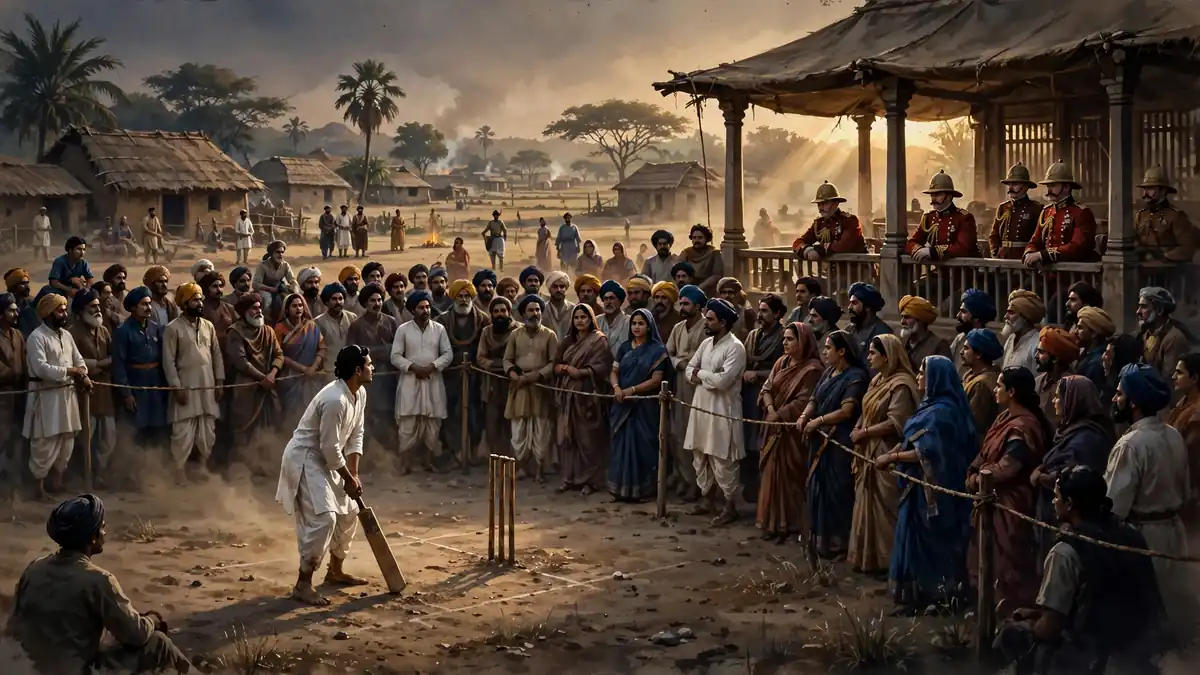
The same year brought Dil Chahta Hai (2001), Farhan Akhtar’s debut film about three friends in urban Bombay, which rewrote how Hindi films talked about friendship and city life. Khan played Akash, the commitment-phobic charmer of the trio, and the film became a defining picture of its generation. Two films in one year, both now regarded as landmarks — and then, at the peak of his powers, Khan stopped. He took a break from acting that lasted four years, through a divorce, a reassessment, and a silence the industry filled with rumors.
The Break: Four Years Away, Then Rang De Basanti
Khan’s marriage to Reena Dutta, his wife since 1986, ended in 2002. The divorce, after sixteen years and two children, coincided with the longest pause of his career. He made no films between 2001 and 2005. The press speculated about retirement. Khan has said little about those years beyond the fact that he needed them, and the record supports him: when he returned, he returned with a different kind of role.
Mangal Pandey: The Rising (2005), a period drama about the 1857 sepoy revolt, was a respectable comeback that underperformed. The film that announced his return properly was Rang De Basanti (2006), Rakeysh Omprakash Mehra’s story of young friends who turn from apathy to activism after a fighter pilot’s death. Khan played DJ, the oldest of the group, a man who has drifted through life and finds a cause late. The film won him the Filmfare Award for Best Actor (Critics), and it became one of Indian cinema’s most quoted films about civic anger.
The break had done what breaks sometimes do. Khan came back pickier, quieter in public, and more willing to let a film carry a message. The next decade would show how far he was willing to take that instinct — into the director’s chair, into television, and into the most socially pointed work of any mainstream Indian star.
Behind the Camera: Taare Zameen Par
Khan’s directorial debut, Taare Zameen Par (2007), is the film he is proudest of, and the one that changed his standing in India most completely. He plays Ram Shankar Nikumbh, an art teacher who recognizes that Ishaan, an eight-year-old boy failing at school, is dyslexic — and who fights the boy’s parents and teachers to see it. The film won Filmfare Awards for Best Film and Best Director, and it did something no Filmfare trophy measures: parents across India started talking about dyslexia. Teachers wrote to the production. Schools changed how they handled struggling children. A commercial film became a public-health conversation.
The film also settled the question of whether Khan could direct. He could, and he did it by stepping back: the child actor Darsheel Safary carries the film, and Khan’s own performance is deliberately quiet, a supporting turn inside his own production. It was the clearest expression of the perfectionist idea — the film matters more than the star — and it is the film other Indian filmmakers cite most often when they talk about Khan’s influence.
As a producer he kept the same standard. Jaane Tu… Ya Jaane Na (2008) launched his nephew Imran Khan as a romantic lead and became a hit. Peepli Live (2010), a satire about a farmer threatening suicide to claim compensation, was selected as India’s official entry for the 83rd Academy Awards. The production company was no longer a vanity label. It was a house with a taste, and the taste was Khan’s.
Ghajini, 3 Idiots, PK, and Dangal: The Record-Breaking Run
Ghajini (2008) started the run that made Khan the box office’s biggest name. A revenge thriller in which he played a man with short-term memory loss, it became the first Hindi film to cross ₹100 crore net in India, and the industry began counting a new benchmark — the “100-crore club” — because of it. The physical transformation got the attention: Khan built a muscled, tattooed frame for the role. The film’s number got the industry’s attention, and it never stopped counting.
3 Idiots (2009), directed by Rajkumar Hirani, is the most loved film of his career. Khan played Rancho, the engineering student who treats college as a place to learn rather than a place to collect grades, and the film’s critique of India’s exam-obsessed education system landed in every middle-class home in the country. It grossed about ₹460 crore worldwide, a record for an Indian film at the time, and it still plays on television to audiences who can quote it line by line.
PK (2014), also with Hirani, cast Khan as an alien who arrives on Earth naked and confused and ends up asking the questions about organized religion that no mainstream Indian film had dared to ask. Deepika Padukone, his co-star in PK, played the journalist who helps him make sense of the planet. The film grossed about ₹854 crore worldwide and became, briefly, the highest-grossing Indian film ever made. The protests it drew from religious groups only widened its audience.
Dangal (2016) broke every record that remained. Khan played Mahavir Singh Phogat, the former wrestler who trains his daughters Geeta and Babita to become champions, and he gained and then lost a large amount of weight across the shoot to play the character young and old. The film grossed about ₹2,070 crore worldwide, according to trade tracker Sacnilk, and it remains the highest-grossing Indian film of all time. China contributed well over ₹1,300 crore of that total, a figure no Indian film had approached in any single overseas market. The third Filmfare Award for Best Actor of his career came with it, for a performance that asked an audience to watch a father push his daughters past every limit he had set for them — and to decide for itself whether he was right.
The Profit-Share Model and the 0M Fortune
Khan’s money works differently from most stars’ money. He rarely takes a fixed fee. Instead, he takes a share of a film’s profits — reported at 50 to 75 percent on his biggest films — which means a flop pays him little and a hit pays him enormously. Trade reports put his per-film fee, when he does take one, at ₹100–150 crore, and his endorsement rate at roughly $1.5–2 million per day of shooting. The model explains both the fortune and the risk: Dangal made him far richer than any fee would have, and the flops of 2018 and 2022 cost him in a way a fixed fee never would.
The estimates disagree, as they always do for a private fortune. Alux’s October 2026 valuation puts him at $220 million (about ₹1,862 crore). Celebrity Net Worth, updated June 26, 2026, gives $200 million. BollywoodFox, updated July 16, 2026, gives $211 million. EatHealthy365, from February 2026, gives $235 million. Deccan Chronicle’s September 2026 ranking, based on the Hurun India Rich List, puts him at ₹1,800 crore. Moneycontrol reported ₹1,862 crore in 2026, citing media reports. The honest reading is a range of $200–235 million, anchored at $220 million — the figure Alux published in October 2026 and the figure Guide Net Worth’s own net-worth profile of Khan uses.
Three pillars hold the fortune up. The first is the profit-share film money, led by Dangal and PK. The second is Aamir Khan Productions, founded in 1999, whose library — Lagaan, Taare Zameen Par, Dangal, Laapataa Ladies — industry analysts value at well over $100 million. The third is property, centered on his Pali Hill home in Bandra, Mumbai, where he has lived for years. Alux puts his annual income at around $15 million a year, from film fees, profit shares, and the production company. Guide Net Worth’s full net-worth profile of Aamir Khan works through each pillar in detail, and CelebAmerica’s net-worth profile of Aamir Khan covers the same fortune from the sister site’s angle.
| Outlet | Estimate | Date |
| Alux | $220 million | October 2026 |
| Celebrity Net Worth | $200 million | Updated June 26, 2026 |
| BollywoodFox | $211 million | July 16, 2026 |
| EatHealthy365 | $235 million | February 2026 |
| Deccan Chronicle / Hurun | ₹1,800 crore | September 26, 2026 |
| Moneycontrol (media reports) | ₹1,862 crore | 2026 |
One stale figure deserves a burial. Older profiles still circulate a ₹800 crore net worth from 2022, and a few aggregation sites still print it. It predates the Dangal profit-share accounting, the production company’s growth, and the 2026 valuations, and it has no place in a 2026 estimate. Against his peers, Khan sits well below Shah Rukh Khan — ranked at ₹10,000 crore in the same Deccan Chronicle list — and the gap is a business story, not a talent contest: Shah Rukh built a diversified empire around Red Chillies and the Knight Riders, while Khan’s wealth is tied far more tightly to the films themselves.
Satyamev Jayate and the Paani Foundation
In 2012 Khan did something no Indian film star of his standing had done: he took a television job, and he used it to talk about female foeticide, child sexual abuse, medical malpractice, and water scarcity. Satyamev Jayate, on Star Plus, ran for three seasons between 2012 and 2014, and each episode paired research with the testimony of real people affected by the issue. The show drew the kind of audience a film star’s presence guarantees, and it used that audience to push subjects the news channels treated as ratings poison.
The show had measurable effects. Episodes on medical negligence and on the misuse of generic drugs fed into policy debates, and the Rajasthan government moved on female foeticide after the show’s first episode on the subject drew national attention. Khan has said the show was the hardest work of his career, harder than any film, because the stories were real and the people telling them were sitting in front of him. It also fixed his public image in a new shape: not only a perfectionist actor, but a citizen with a platform who intended to use it.
The Paani Foundation, founded in 2016 with his then-wife Kiran Rao, carried the same instinct into the field. The foundation works on water conservation in drought-hit Maharashtra, running a competition — the Satyameva Jayate Water Cup — in which villages compete to build watershed structures. The work is unglamorous and slow: check dams, contour trenches, and village labor, measured in water tables rather than headlines. Khan has visited the villages himself, and the foundation’s own reporting credits the participating villages with measurable improvements in groundwater. It is the least cinematic part of his life, and the one he seems to take most seriously.
Thugs, Laal Singh Chaddha, and the Reckoning
The run ended badly. Thugs of Hindostan (2018), a big-budget period adventure co-starring Amitabh Bachchan, opened huge and collapsed within days, with audiences rejecting its tone and its length. Laal Singh Chaddha (2022), Khan’s remake of Forrest Gump, fared worse: a boycott campaign on social media, weak reviews, and a box-office run that never recovered. Two films, four years apart, and both expensive failures. For a star whose model was one film at a time, chosen slowly, the failures hit harder than they would have hit a star who made four films a year.
Khan’s response was to stop again. After Laal Singh Chaddha he took a break from acting, said publicly that the film’s failure had affected him, and spent the time producing instead. Laapataa Ladies (2024), directed by Kiran Rao and produced by his company, was the result: a small, warm comedy about two brides swapped on a train, which became a word-of-mouth hit and was selected as India’s official entry for the 97th Academy Awards. It proved the production house still had its taste. It did not answer the question the industry was asking, which was whether the actor himself still had an audience.
Sitaare Zameen Par: The 2025 Comeback
The answer arrived on June 20, 2025. Sitaare Zameen Par, directed by R.S. Prasanna and co-starring Genelia Deshmukh, cast Khan as Gulshan Arora, a disgraced basketball coach ordered to train a team of players with Down syndrome. The film is a remake of the Spanish hit Champions (2018) and a deliberate echo of Taare Zameen Par — the title says so — but its tone is lighter, a sports comedy rather than a drama, and its cast of ten debutant actors with Down syndrome carries much of the film.

The numbers settled the comeback question. Bollywood Hungama’s final tally gives the film ₹165.67 crore net in India and ₹266.49 crore worldwide, on a reported budget of ₹90 crore — a clear hit, and one of the highest-grossing Hindi films of 2025. Trade reporting noted that it outgrossed Salman Khan’s Sikandar, which closed around ₹177 crore worldwide, a comparison the press loved because the three Khans are always measured against each other. Khan also broke with convention on the release: he held the film back from the big streaming platforms for months, betting that the theatrical run and a later, carefully handled digital release would be worth more than a quick sale. The streaming debut followed in 2026.
What the film proved was narrower and more useful than a comeback narrative. Khan’s audience had not left him; it had left the two films that did not work. A story with warmth, a cast of newcomers, and a subject handled with respect brought the same audience back. At 60, he had his first hit in nine years, and it was the gentlest film of his career.
Three Marriages, Three Children, and Gauri Spratt
Khan’s personal life has been public in the way a star’s always is, and he has guarded it in the way his always has been. He married Reena Dutta on April 18, 1986, before his stardom, when he was 21. The marriage lasted sixteen years and produced two children: Junaid, born in 1993, and Ira, born in 1997. It ended in divorce in 2002, the same year his career paused. Junaid made his acting debut in Maharaj (Netflix, 2024). Ira works in theatre, as a director, and married her longtime partner Nupur Shikhare in January 2024.
He married Kiran Rao, a filmmaker, on December 28, 2005. Their son Azad was born in 2011. The two worked together for years — Rao directed Dhobi Ghat (2011) for his company, and they founded the Paani Foundation together in 2016 — and when they announced their divorce in July 2021, they said they would keep working together and keep raising their son together. They have: Rao’s Laapataa Ladies came from his company three years later, and the foundation still carries both their names.
The third marriage is the newest fact in this biography, and the one that changed the most in 2026. Khan introduced Gauri Spratt publicly on his 60th birthday in March 2025, saying they had known each other for about 25 years. Spratt, from Bengaluru, works in the beauty and wellness industry. On July 5, 2026, the two married in a small registered ceremony at Khan’s residence in Bandra, Mumbai, with around 150 friends and family present, according to Pinkvilla’s report the next morning. Filmfare reported in November 2026 that the couple, who live in a rented Pali Hill home, are looking for a new place as the building faces redevelopment. On October 29, 2026, they celebrated their first Karwa Chauth as a married couple at Anil Kapoor’s home, photographed arriving hand in hand. Guide Net Worth’s age profile of Aamir Khan covers the marriage and the 2026 comeback in full.
The Awards Shelf
Khan has won 9 Filmfare Awards from 32 nominations, and 4 National Film Awards — a record that puts him among the most decorated actors of his generation without ever chasing the ceremonies. The Filmfare wins, in order, tell the story of the career: Best Male Debut for Qayamat Se Qayamat Tak (1989); Best Actor for Raja Hindustani (1996); Best Actor and Best Film for Lagaan (2001); Best Actor (Critics) for Rang De Basanti (2006); Best Film and Best Director for Taare Zameen Par (2007); Best Film for Dangal (2016), with his third Best Actor trophy for the same film.
| Honor | Year | Detail |
| Filmfare Best Male Debut | 1989 | Qayamat Se Qayamat Tak |
| National Film Award, Special Jury | 1989 | Raakh |
| Filmfare Best Actor | 1996 | Raja Hindustani |
| National Film Award, Best Popular Film | 2001 | Lagaan (shared with Ashutosh Gowariker) |
| Filmfare Best Actor + Best Film | 2001 | Lagaan |
| Padma Shri | 2003 | Fourth-highest civilian honor, Government of India |
| Filmfare Best Actor (Critics) | 2006 | Rang De Basanti |
| Filmfare Best Film + Best Director | 2007 | Taare Zameen Par |
| Padma Bhushan | 2010 | Third-highest civilian honor, Government of India |
| Filmfare Best Actor + Best Film | 2016 | Dangal |
| Academy Award nomination | 2002 | Best Foreign Language Film, Lagaan (74th Academy Awards) |
The civilian honors matter more than the film trophies, and Khan treats them that way. The Padma Shri came in 2003, the Padma Bhushan in 2010 — the fourth- and third-highest civilian honors India gives. He also received an honorary title from the Government of China in 2017, a recognition of what Dangal and 3 Idiots meant to Chinese audiences, where his films found a following no other Indian star has matched. He has won four National Film Awards in total, and an AACTA Award from Australia. The one ceremony he made an exception for was the Academy Awards in 2002, when he flew to Los Angeles for Lagaan‘s nomination and said he did not care about the award itself — only about the audience it would bring the film.
The Public Image: One Film at a Time
Khan’s public image is the most controlled of any Indian star’s, and the control is the point. He gives few interviews, avoids award ceremonies, stays off social media for long stretches, and releases a film only when it is ready — sometimes years after the last one. The industry reads this as arrogance. His audience reads it as respect: when an Aamir Khan film arrives, it arrives finished.
The comparison with the other two Khans is unavoidable, and it flatters all three in different ways. Shah Rukh Khan, whose biography Guide Net Worth covers in full, built a global brand and a business empire, and his fortune — ₹10,000 crore by the Deccan Chronicle ranking — dwarfs Khan’s. Salman Khan built the most loyal mass audience in Hindi cinema and a charity that carries his name. Aamir Khan built the smallest, most careful filmography of the three, and the one with the highest batting average: fewer films, more of them remembered, and a record of taking subjects — dyslexia, farmer suicide, religious dogma, water scarcity — that the other two never touched.
He is 5 ft 5 in (165 cm), the shortest of the three Khans, and the fact is mentioned here because readers ask about it constantly and because it has never mattered to a single one of his films. The height is a footnote. The filmography is the story.
What Comes Next at 61
At 61, Khan is in a position he has been in twice before: coming off a hit, newly married, and free to choose. The first time, after Lagaan, he chose a four-year break. The second time, after Laal Singh Chaddha, he chose producing. This time the choice is still unannounced, and the reporting window through November 2026 carries no confirmed next acting role. What is certain is the shape of the choice: one film, chosen slowly, made his way, with a profit-share deal rather than a fee.
The production company has the stronger near-term signal. Laapataa Ladies showed that Aamir Khan Productions can find new directors and new stories, and the Sitaare Zameen Par model — a small, warm film with debutant actors, made for ₹90 crore and returned nearly three times that worldwide — is a template the company can repeat. The Paani Foundation’s work continues in Maharashtra regardless of what happens on screen.
The biography, as of November 17, 2026, is still being written live, by a man who has now spent 53 years in front of a camera — from an eight-year-old in Yaadon Ki Baaraat to a 61-year-old coach in Sitaare Zameen Par — and who has made a career out of refusing to hurry. The next film will arrive when it is ready. That has always been the deal, and it is the reason the audience is still waiting.
Sources & Reporting
This profile draws on Britannica’s Aamir Khan biography (updated October 29, 2026), Wikipedia’s sourced Aamir Khan biography and its list of awards and nominations, Alux’s October 2026 net-worth valuation, Celebrity Net Worth (updated June 26, 2026), Pinkvilla’s July 6, 2026 wedding report, Filmfare’s November 4, 2026 report on the couple’s move and its October 30, 2026 Karwa Chauth report, GG2’s October 30, 2026 Karwa Chauth report, Bollywood Hungama’s box-office tracking for Sitaare Zameen Par, IWMBuzz’s July 21, 2025 box-office report, Sacnilk’s Dangal tracking (via CelebAmerica), Deccan Chronicle’s September 26, 2026 richest-actors ranking based on the Hurun India Rich List, Moneycontrol’s 2026 wealth reporting, StarsUnfolded’s biography profile, BollywoodFox (updated July 16, 2026), NETTV4U (updated August 2026), and eathealthy365 (February 2026), plus Guide Net Worth’s own Aamir Khan net-worth and age profiles and CelebAmerica’s Aamir Khan net-worth profile. Net worth figures are third-party estimates and are labeled as estimates. Box-office figures are trade-tracker estimates and are rounded. Corrections: figures are updated when new reporting emerges — contact us via the About page if you spot an error.
Frequently Asked Questions
How old is Aamir Khan in 2026?
Aamir Khan is 61 years old in 2026. He was born Mohammed Aamir Hussain Khan on March 14, 1965, in Bombay (now Mumbai), and he turned 61 on March 14, 2026. Some older profiles still list him at 59 or 60; those pages have not been updated since his 2026 birthday.
What is Aamir Khan’s net worth in 2026?
Aamir Khan’s net worth in 2026 is estimated at about $220 million, inside a $200–235 million range. Alux’s October 2026 valuation gives $220 million; Celebrity Net Worth, updated June 26, 2026, gives $200 million; eathealthy365 gives $235 million. The fortune rests on his profit-share film deals, Aamir Khan Productions, and property in Mumbai. No outlet has seen his accounts, so every figure is an estimate.
Who is Aamir Khan’s wife in 2026?
Aamir Khan’s wife in 2026 is Gauri Spratt, an entrepreneur from Bengaluru. They married on July 5, 2026, in a small registered ceremony at his residence in Bandra, Mumbai, according to Pinkvilla, Filmfare, and GG2, and Britannica’s October 29, 2026 update. He introduced her publicly on his 60th birthday in March 2025, saying they had known each other for about 25 years. This is his third marriage, after Reena Dutta (1986–2002) and Kiran Rao (2005–2021).
How many children does Aamir Khan have?
Aamir Khan has three children. Junaid Khan and Ira Khan are his children with his first wife, Reena Dutta — Junaid made his acting debut in Maharaj on Netflix in 2024, and Ira works in theatre as a director. Azad Rao Khan is his son with his second wife, Kiran Rao, born in 2011. Khan has no children with his third wife, Gauri Spratt.
How tall is Aamir Khan?
Aamir Khan is listed at 5 ft 5 in (165 cm), the figure most biography and height trackers use. There is no officially verified measurement, and some profiles round it to 5 ft 6 in. He is the shortest of the three Khans — Shah Rukh Khan is listed at 5 ft 8 in and Salman Khan at 5 ft 8 in — but his height has never been a factor in any of his roles.
What was Aamir Khan’s first movie?
Aamir Khan first appeared on screen as a child actor in Yaadon Ki Baaraat (1973), playing the youngest Tariq at age eight. His adult debut was Holi (1984), a small ensemble film directed by Ketan Mehta. His breakthrough as a leading man was Qayamat Se Qayamat Tak (1988), with Juhi Chawla, which won him the Filmfare Award for Best Male Debut.
What is Aamir Khan’s biggest movie?
Aamir Khan’s biggest movie is Dangal (2016), which grossed about ₹2,070 crore worldwide according to trade tracker Sacnilk, making it the highest-grossing Indian film of all time — a record it still holds in 2026. China contributed well over ₹1,300 crore of that total. His next biggest are PK (2014, about ₹854 crore worldwide) and 3 Idiots (2009, about ₹460 crore worldwide).
What awards has Aamir Khan won?
Aamir Khan has won 9 Filmfare Awards from 32 nominations, including Best Actor for Raja Hindustani (1996), Lagaan (2001), and Dangal (2016), and Best Director for Taare Zameen Par (2007). He has won 4 National Film Awards, and the Government of India honored him with the Padma Shri in 2003 and the Padma Bhushan in 2010. Lagaan was nominated for the Academy Award for Best Foreign Language Film in 2002.
Nathan Cole
Nathan Cole is the editor of Guide Net Worth. He covers celebrity wealth the way a business desk covers earnings: reported figures first, estimates labeled as estimates, and no invented numbers. Every profile on this site passes through his desk before it publishes. About Guide Net Worth · Corrections: figures are updated when new reporting emerges — contact us via the About page if you spot an error.
References & Sources
This article has been fact-checked and verified against multiple public sources, financial disclosures, SEC filings, Forbes reports, Celebrity Net Worth databases, and official records. All net worth estimates are based on publicly available information and financial analysis.